The easiest way to host a Fourth of July gathering is to work backward from the day: settle the guest list and menu two weeks out, shop and prep in the final week, and keep the day itself for grilling and chatting. Independence Day in the United States is observed on July 4, so there is no floating date to track.
Below is a timeline that works for a backyard cookout of ten or a street party of fifty. Scale the quantities, keep the order.
Why July 4 matters
The date marks the adoption of the Declaration of Independence by the Continental Congress in 1776. Early celebrations included public readings, bells, parades and cannon fire, and fireworks and picnics became part of the tradition over the following decades. Today it is a federal holiday in the US, which is why so many people have the day off and why local events often cluster around it.
Knowing that history is useful when you plan. A short reading of a few lines from the Declaration, or simply a toast before the meal, gives the party a moment of meaning without turning it into a lecture.
Two weeks out: the foundation
Start with the questions that shape everything else. How many people are coming, and how many are children? Is the space shaded? Will it be a sit-down meal or a graze-all-afternoon spread?
- Send invitations with a start time and an approximate end time.
- Ask about dietary needs while you are asking about attendance.
- Assign easy contributions: drinks, ice, a side dish or dessert.
- Check where you can borrow or rent extra tables, chairs and coolers.
One week out: the Fourth of July menu
Pick dishes that survive heat and waiting. Pasta salad, coleslaw, marinated vegetables, deviled eggs and fruit platters all hold up better than anything that needs to come off the grill at the last second. Choose one or two grilled items rather than five, and prepare the rest in advance.
| Course | Make-ahead choice | Do on the day |
|---|---|---|
| Mains | Marinate chicken, form burger patties | Grill |
| Sides | Potato salad, slaw, bean dishes | Stir and garnish |
| Fruit | Wash and chop melon, berries | Arrange on platters |
| Dessert | Bake pies or bars | Slice and serve |
| Drinks | Mix lemonade or iced tea base | Add ice |
Cold dishes should stay cold. A common food-safety guideline is not to leave perishable food out for more than two hours, and only one hour when it is very hot outside. Nest salad bowls in larger bowls of ice to buy yourself time.
The day before: set the stage
Set up tables and seating, test the grill and check the gas or charcoal. Fill coolers in stages, with drinks in one and food in another, since the drinks cooler gets opened constantly and the food cooler should not.
Decide where the shade is. In July, a table in full sun is a table nobody sits at. An umbrella, a pop-up canopy or even a tree-side placement matters more than any centerpiece.
Plan B for weather and crowds
Thunderstorms are common in early July across much of the country, so decide in advance what happens if the sky turns. Clear a corner of the garage, identify indoor space for the buffet, and tell guests the rain plan in the invitation.
Fireworks and safety
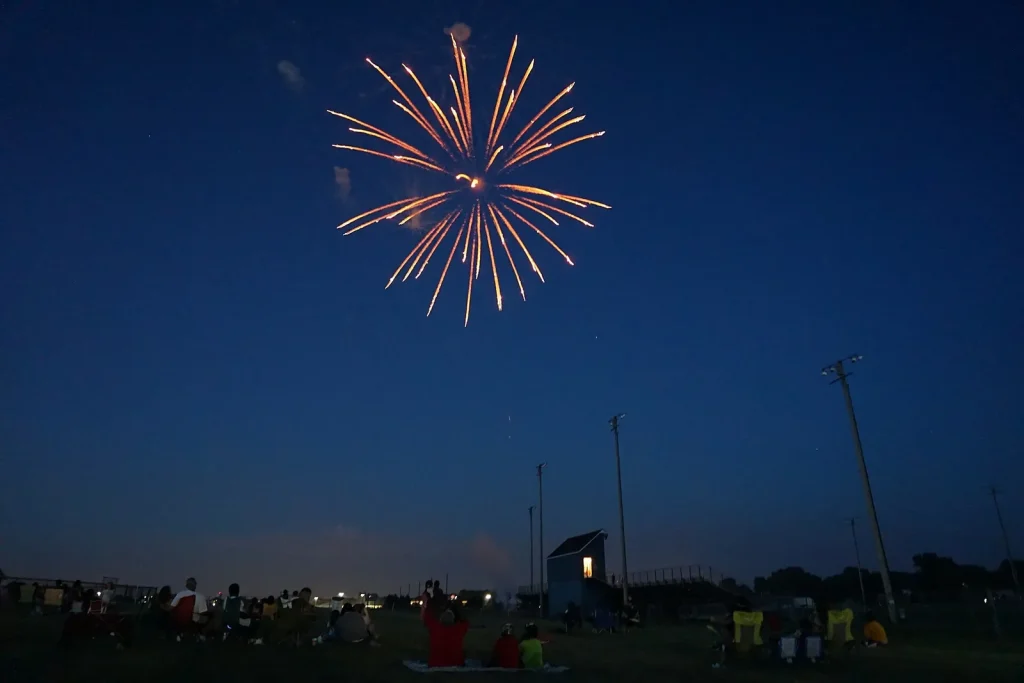
Many communities restrict personal fireworks, and public displays are usually the safer and more impressive choice. If your area allows consumer fireworks, follow local rules and the instructions on the package, keep water nearby and keep children at a distance. When in doubt, take everyone to a professional show.
Activities that keep everyone busy
Lawn games, a water-balloon toss, a playlist of classic summer songs and a quiet table for drawing keep different ages happy. A simple trivia round about American history, written in advance, suits a mixed crowd. For more ideas that work with children, see our family-friendly party planning guide, which uses the same stations approach.
Day-of schedule
- Three hours before: set out drinks, ice, serving spoons and napkins.
- Two hours before: start the grill, bring cold dishes out last.
- Guests arrive: hand each person a drink within five minutes.
- Meal: serve in waves rather than all at once.
- Dusk: move to fireworks or a lawn-chair sparkler-free sunset.
- End: pack leftovers into small containers for guests.
If you enjoy hosting, the same timeline adapts well to the Labor Day weekend, which arrives with a similar mix of cookouts and travel.
Hosting friends? Friendship Day ideas pair nicely with a summer party, and the same list of conversation starters works around a picnic table.
Key takeaways
- Work backward from July 4: guest list first, shopping later, day-of tasks last.
- Choose make-ahead dishes and limit grilling to one or two items.
- Provide shade, water and a rain plan before you think about decorations.
- Prefer public fireworks displays and follow local rules.
Browse more seasonal ideas in the Holidays & National Days archive.
Food and fireworks safety notes here are general information, not professional advice. Check local regulations and official guidance for your area.
Frequently asked questions
When is Independence Day observed in the US?
Independence Day is observed on July 4 each year. When the date falls on a weekend, federal offices usually close on the nearest weekday.
How early should I start planning a Fourth of July party?
About two weeks is plenty for a casual gathering. Larger events, or ones that need rentals, benefit from three to four weeks.
What foods are best for a hot outdoor party?
Choose dishes that hold up in warmth or chill easily, such as slaw, pasta salad, fruit and marinated vegetables, and keep cold items on ice.
What should I do if it rains on July 4?
Move the buffet indoors or under a canopy and keep games flexible. Tell guests the backup plan ahead of time so nobody is confused.
Photo: 2018 Saline Fourth of July Fireworks 01 by Michael Barera, CC BY-SA 4.0, via Wikimedia Commons