To plan a road trip, decide your must-see stops, work out realistic daily drive times, check the vehicle, and leave slack in the schedule. Everything else, from playlists to snacks, is built on those four foundations.
The best road trips feel spontaneous but rest on a bit of quiet preparation. Here is a practical order of operations you can follow whether you are driving for a weekend or a month.
Step 1: Choose the anchor points
Begin with two or three places you really want to see, then connect them. Resist the urge to fill every gap on the map, because the long stretches between anchors are where the unexpected discoveries tend to happen.
Consider the season at this stage. Mountain passes, desert heat and coastal fog can all change what a given route feels like, and our guide to choosing a destination by season can help you match the route to the calendar.
Step 2: Set realistic daily distances
Map apps give driving times with no traffic, no photo stops and no meals. Add roughly 25 to 30 percent to each leg, and you will be closer to what actually happens.
A simple pace guide
| Trip style | Daily driving | Best for |
|---|---|---|
| Relaxed | 2 to 4 hours | Families, scenic routes, lots of stops |
| Balanced | 4 to 6 hours | Most multi-day trips |
| Distance-focused | 6 to 8 hours | Getting between regions quickly |
If you are covering a lot of ground, alternate a long day with a short one. A rest day in the middle of a long route often saves the whole trip.
Step 3: Prepare the car
Before you plan a road trip around a particular vehicle, make sure it is ready for the distance. A pre-trip service check by a mechanic is a sensible habit, especially for older cars.
- Tire pressure and tread, including the spare
- Oil, coolant and washer fluid levels
- Brakes, lights and wipers
- Registration, insurance papers and a valid license
- A phone mount and a charger that works in the car
If you are renting, read the policy on mileage, additional drivers and where you may travel. Details differ from company to company, so confirm them before you book.
Step 4: Build a flexible budget
Road trip costs usually fall into fuel, lodging, food, tolls and parking, and activities. Estimate fuel by dividing the total distance by your car’s typical mileage, then multiply by the local fuel price you find when you travel.
Groceries and a cooler save money and time, and the habits in our budget travel habits guide apply just as well on the road. Add a cushion of about 10 percent for surprises.
Step 5: Pack for the car, not the plane
A car lets you bring more, but packing without a plan turns the back seat into a mess. Use one soft bag per person and a single box for shared gear so you are not unloading the entire trunk each night.
Keep a small emergency kit within reach: water, a first-aid kit, a flashlight, jumper cables, a tire repair kit or sealant, and a blanket. If you want to travel with less, the tips in how to pack light will make unloading easier at every stop.
Step 6: Leave room for the unplanned
Schedule one open block per day. It might become a roadside diner, a trailhead you spot from the highway, or an extra hour at a place you love.
Share your general route with a friend or relative, particularly if you will be in areas with patchy signal. Download maps, playlists and any reservations while you still have a strong connection.
A checklist to plan a road trip
- Pick anchor stops and sketch the route.
- Divide the trip into daily legs with buffer time.
- Book only the lodging and tickets that fill up.
- Service the car and pack an emergency kit.
- Download offline maps and share your itinerary.
For more guides, from carry-on packing to safety, visit our travel archive.
Key takeaways
- Anchor the trip around a few must-see places and let the rest stay flexible.
- Add a quarter or more to map-app drive times.
- Check the car before leaving, and pack a small emergency kit.
- Book fixed points only, and keep one open block each day.
Frequently asked questions
How many hours should I drive each day?
Many travelers settle on four to six hours of driving per day so there is time to stop and explore. Longer days are possible, but fatigue builds quickly and the trip stops being fun.
Should I book every stop in advance?
Book only the fixed points, such as busy-season lodging or timed-entry attractions. Leave other nights flexible so you can adjust when a detour is worth taking.
Do I need paper maps?
They are a useful backup because phone signal is unreliable in remote areas. Download offline maps before you leave and carry a basic paper map or atlas for the region.
How often should I stop?
A short break about every two hours helps with alertness and comfort. Swap drivers when you can, and pull over if you feel drowsy.
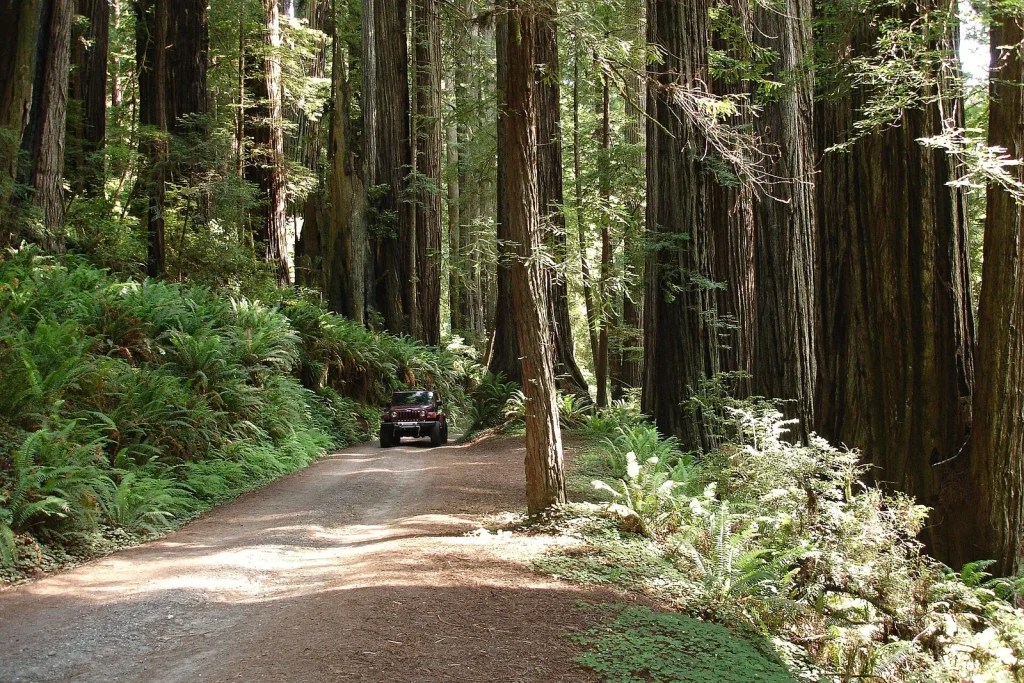
Photo: Car-Barrel Scenic Road – Redwood – panoramio (2) by Pavel Špindler, CC BY 3.0, via Wikimedia Commons