Solo travel safety rests on three things: researching the place before you go, telling someone your plans, and staying alert to your surroundings. Add a few habits around lodging and transport, and traveling alone becomes both manageable and rewarding.
No checklist can remove all risk. The goal is to stack small advantages in your favor so that you can enjoy the independence that makes solo travel appealing.
Before you go: research and sharing
Read official government travel guidance for your destination, and look at recent traveler reports about neighborhoods and common scams. Learn the local emergency number, because it is not the same everywhere.
Leave a copy of your itinerary with a family member or friend, and agree on how often you will check in. Save copies of your passport and key documents in secure cloud storage. A good understanding of travel insurance will also help if something goes wrong.
Choosing where to stay
Many solo travelers prefer a smaller place where staff learn their name, because someone will notice if something is off.
Lodging is your base, so spend time on it. Look for places with consistently good recent reviews, a well-lit location and a reception or staff presence if that suits you.
- Read reviews that mention safety and the walk from transport.
- Arrive during daylight on your first day if you can.
- Check that the room door and windows lock properly.
- Keep valuables in a safe or locked bag, not out in the open.
- Avoid saying your room number aloud in public areas.
Getting around with confidence
Know how you will reach your lodging before you land. Use official taxis, ride-hailing apps with visible trip tracking, or public transport you have checked in advance. Our airport tips cover arrivals in more detail.
Download offline maps so you can navigate without advertising that you are lost. If you need to check directions, step into a shop or café rather than standing in the middle of a crowded street.
Solo travel safety habits for everyday days
Most good habits are small and unremarkable. Carry only what you need, keep a spare card and a little cash in a separate place, and try to blend in with local dress and behavior.
A simple daily routine
| Time | Habit |
|---|---|
| Morning | Check weather, plan your route, share your plans |
| Daytime | Keep phone and wallet secure, stay aware in crowds |
| Evening | Plan your way back before dark, and eat in busy places |
| Night | Charge devices, lock up, send a short check-in |
Drinks deserve a note. Keep your drink within sight, and be cautious about accepting drinks or food from people you do not know.
Trusting your instincts
Instinct is simply your brain noticing small details faster than you can name them. A street that feels too empty, a stranger who stands too close, or an offer that seems too good all deserve a second look.
If a situation feels wrong, leave. You do not owe anyone politeness at the expense of your comfort. A friendly person who respects a firm no is rarely upset by it.
Be careful about how much personal information you share with new acquaintances, including where you are staying and that you are alone. Social media posts about your location are best published after you have moved on.
Staying prepared for problems
Know what you would do if your phone were lost or stolen. Keep key numbers written down, use a screen lock, and enable features that let you locate or wipe a lost device.
Small preparations also make a difference, for example a lighter bag from our packing guide, which makes you easier to move and less of a target. For more guides, see the travel category.
This article offers general safety information, not professional security, medical or legal advice. Conditions change, so consult official government travel guidance and a qualified professional for your specific situation.
Key takeaways
- Research your destination and learn the local emergency number.
- Share your itinerary and agree on check-in times.
- Choose well-reviewed lodging and plan how you will get there.
- Stay aware, protect your drinks and valuables, and leave any situation that feels wrong.
- Keep backups of documents and a plan for a lost phone.
Frequently asked questions
Is solo travel safe?
It can be, and millions of people do it every year. Risk depends on the destination, your preparation and your choices, so research the place and follow local guidance.
Should I tell people where I am?
Yes. Share your itinerary and check in at regular intervals with someone you trust, so that anyone who needs to find you knows where to start.
What should I do if I feel uncomfortable?
Leave, even if it feels awkward. Move to a busy, well-lit place, enter a shop or hotel, and ask staff for help if you need it.
How do I meet people without taking risks?
Choose group tours, hostel common areas, classes or organized activities in public places. Meet new acquaintances in busy spots, and keep your own transport and plans.
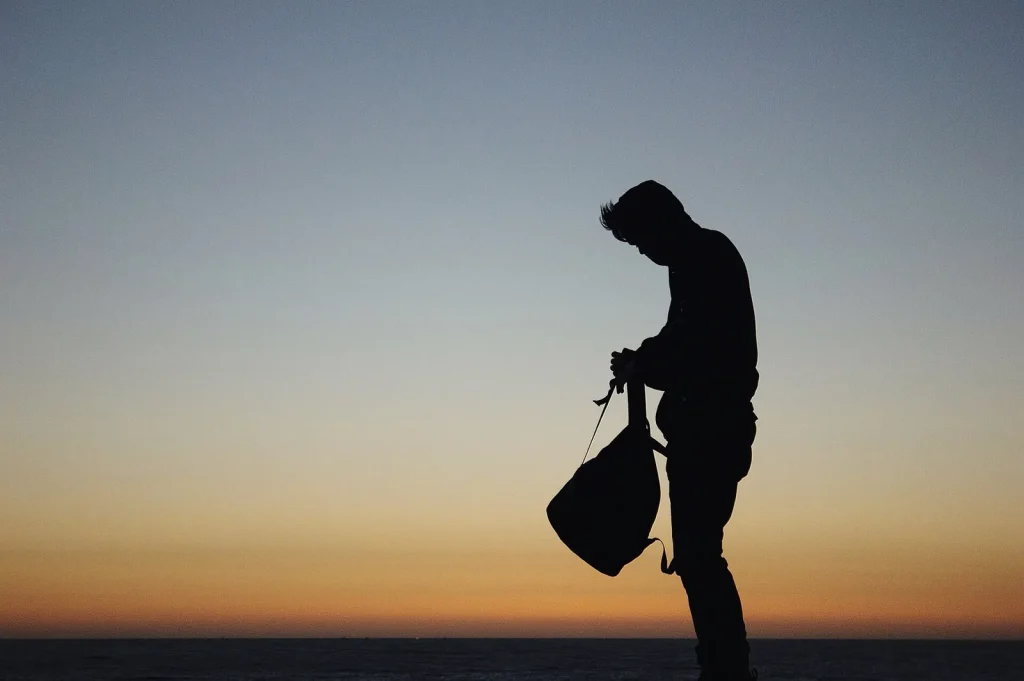
Photo: Backpacker at sunset by Vitaly gooner, CC0, via Wikimedia Commons