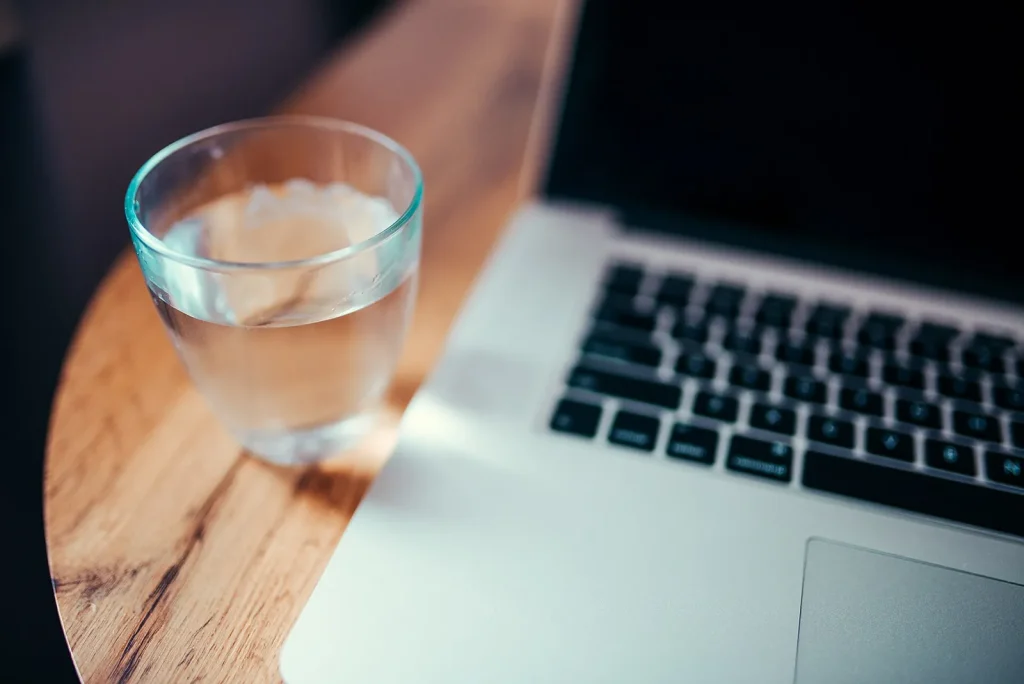
Staying hydrated mostly comes down to drinking fluids regularly through the day, paying attention to thirst, and eating water-rich foods. You do not need a complicated system. You need a few cues that make drinking easy to remember.
Needs vary with body size, climate, activity and health, so treat any number you read as a rough guide rather than a rule.
Why fluids matter
Water is involved in nearly everything the body does, from moving nutrients around to helping regulate temperature. You lose it constantly through breathing, sweat and urine, so it has to be topped up.
When you fall a little short, you may notice thirst, a dry mouth or darker urine. These are everyday signals, and for most healthy people a glass of water and a snack are all that is needed.
Myth versus fact
Hydration advice is full of tidy slogans. Here is how some of them hold up.
Myth: everyone needs exactly eight glasses
The eight-glasses rule is easy to remember, but it is not a precise requirement. Your needs shift from day to day, and you also get fluid from food and other drinks.
Myth: only plain water counts
Tea, coffee, milk, sparkling water and soups all contribute to your fluid intake. Water is a great default, particularly because it has no added sugar, but it is not the only option.
Myth: if you feel thirsty, you are already in trouble
Thirst is simply your body’s normal prompt. For most people it works well as a guide, though some, such as older adults or people exercising in heat, may want to drink on a schedule too.
Fact: more is not always better
Drinking far beyond what you need does not bring extra benefit. Sip steadily rather than forcing large amounts at once.
Habits that make staying hydrated automatic
The trick is attaching water to things you already do.
- Drink a glass when you wake up, before coffee or breakfast.
- Keep a bottle or large glass where you work, and refill it at set times.
- Have a drink with every meal and snack.
- Take a few sips whenever you stand up for a break. A short desk stretch is a natural moment.
- Pour a glass when you get home, before you start dinner.
If plain water bores you, add slices of citrus, cucumber or a few mint leaves, or try cold herbal tea. Sparkling water is fine too.
Eat your water
Many foods are largely water. Cucumber, watermelon, oranges, tomatoes, lettuce, strawberries and yoghurt all pitch in. Soups and stews count too, so a bowl of our easy vegetable soup is a tasty way to add fluid on a cool day.
A simple daily rhythm
| Time | Easy cue |
|---|---|
| Morning | A glass with breakfast |
| Mid-morning | Refill your bottle |
| Lunch | Water, tea or a soup |
| Afternoon | Sip during a short walk or break |
| Evening | A glass with dinner, then taper off if night trips bother you |
Taper off later in the evening if drinking a lot close to bedtime disrupts your sleep. Our sleep hygiene basics guide covers other evening habits worth a look.
When you may need more
Hot weather, long walks, workouts, and time at altitude all raise fluid needs. Illness with fever, vomiting or diarrhoea can too. In those situations, drink a little more often and pay closer attention to how you feel. If you are active outdoors, a regular walking routine is a good moment to carry a bottle along.
Some health conditions and medicines change how much fluid is right for you. If a doctor has given you a specific fluid plan, follow that rather than general advice.
This article offers general wellness information only and is not medical advice. If you have concerns about thirst, urine colour or fluid intake, please speak with a doctor or qualified health professional.
Key takeaways
- There is no single perfect number; listen to thirst and adjust for heat and activity.
- Water, tea, milk and water-rich foods all count.
- Pair drinking with habits you already have.
- Do not force large volumes; sip steadily.
For more everyday wellness reading, visit our health archive.
Frequently asked questions
How can I tell if I am drinking enough?
Pale yellow urine and only occasional thirst are usual signs for most healthy people. Individual needs vary, so ask a professional if you are unsure.
Does coffee dehydrate you?
In normal amounts, coffee and tea still contribute to your fluid intake. Very large amounts of caffeine may have other effects, so moderation is sensible.
Should I drink more when exercising?
Usually yes. Sip before, during and after longer or hotter sessions, and let thirst and the conditions guide you.
Do I need electrolyte drinks?
Most people doing everyday activity do not. Water and normal meals are generally enough, but ask a professional if you have specific concerns.
Photo: A clear glass of water sits next to a laptop by Shixart1985, CC BY 2.0, via Wikimedia Commons