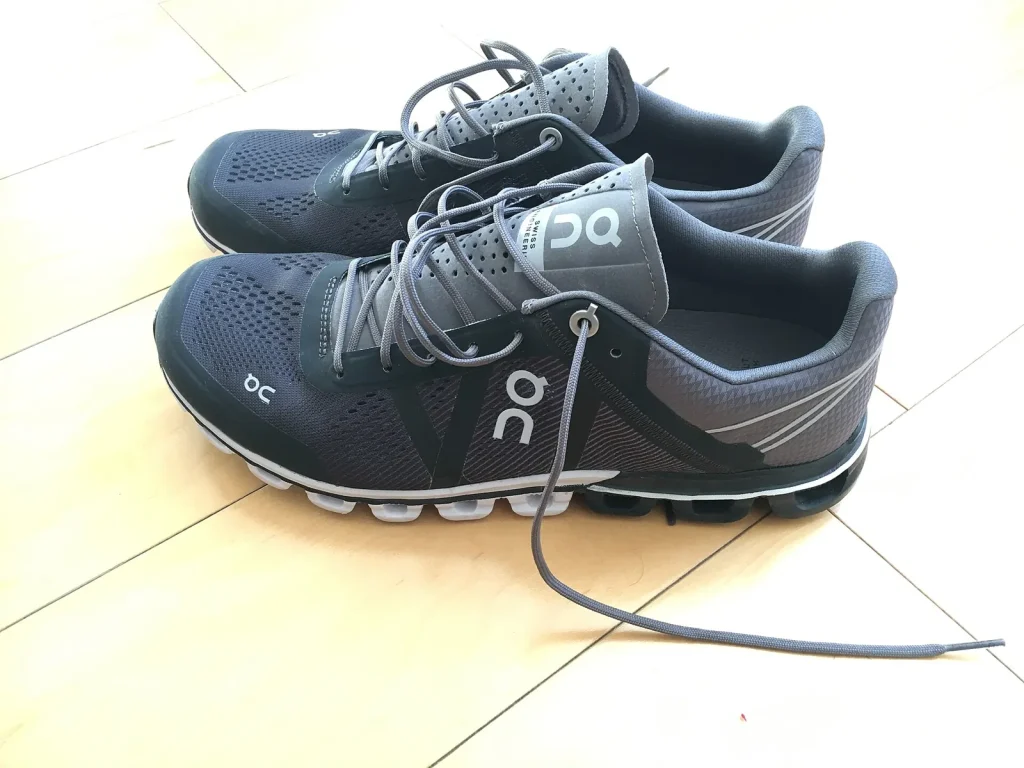
To choose running shoes, prioritise fit and comfort over brand, price or looks. The right pair has about a thumb’s width of space in front of your longest toe, a secure heel and a feel you enjoy within the first few minutes. Everything else is detail.
How to choose running shoes: start with fit
A well-fitting shoe will do more for you than any technology. Your feet swell during exercise, so try shoes on later in the day, wearing the socks you run in. Walk and jog a few steps in the shop if allowed.
Check these points:
- Roughly a thumb’s width between the longest toe and the end of the shoe.
- Room for toes to spread without feeling loose.
- A snug heel that does not slip when you walk or jog.
- No pressure points or rubbing across the top of the foot.
Sizes vary between brands and even between models, so ignore the number on the box if it feels wrong.
Understand cushioning
Cushioning describes how soft the midsole feels. Some runners like plush shoes, while others prefer a firmer, more responsive feel. Neither is better in an absolute sense. Pick what feels good over the distances you run.
Stack height and drop
Stack height is the amount of material under your foot, and drop is the height difference between heel and forefoot. These affect how a shoe feels, but there is no single ideal number. If you are comfortable in your current shoes, a similar drop is a safe starting point when you buy the next pair.
Neutral or support shoes?
Shoe makers often group models into neutral and stability categories. Stability shoes add features meant to guide the foot, while neutral shoes do not. Research on matching shoe type to foot shape is mixed, so comfort is a widely used guide. A specialist running shop can watch you jog and offer suggestions, though you remain the best judge.
Match the shoe to your running
| Type | Typical use | Feel |
|---|---|---|
| Daily trainer | Most easy and medium runs | Balanced cushioning, durable |
| Lightweight racer | Fast sessions and races | Light and responsive |
| Trail shoe | Dirt paths, mud and rocks | Grippy outsole, protective |
| Max-cushion shoe | Long, slow runs or recovery | Soft and padded |
Beginners usually do best with a daily trainer. If you are just beginning, our guide to how to start running pairs well with this article.
A simple shop or online checklist
- Measure both feet, since one is often slightly larger.
- Try on shoes at the end of the day.
- Jog or walk briskly to check for slipping and rubbing.
- Check the return policy, so you can test them on a short run.
- Choose the pair that feels best, even if it is not the most hyped.
When you buy online, order only from sellers with easy returns, and test the shoes indoors first so they stay in sale condition.
When to replace your shoes
Many manufacturers and running shops suggest replacing shoes after somewhere in the range of 300 to 500 miles, or roughly 500 to 800 kilometres, though this varies a lot with body weight, surface and shoe type. Signs of wear include flattened cushioning, uneven tread, a worn outsole and new aches that were not there before.
Rotating between two pairs can extend their life and vary the load on your feet. Keep running shoes for running, and wear other pairs for daily use.
This article is general information, not medical advice. If you have foot pain, a previous injury or a medical condition, consult a podiatrist or other qualified health professional.
Care and prep tips
Do not machine wash or dry shoes with high heat. Air dry them and remove the insoles if they are wet. Prepare your body too: a short warm-up routine before each run reduces stiffness, and a home strength plan builds the leg and core strength that supports good form.
Key takeaways
- Fit and comfort matter more than brand or price.
- Leave about a thumb’s width in front of your toes.
- Choose a daily trainer if you are new.
- Replace shoes when they feel worn, typically after several hundred miles.
Browse more training basics in our sports archive.
Frequently asked questions
Do I need special shoes to run?
Running shoes are designed for repeated impact and forward motion, so they are a better choice than casual shoes. They do not need to be expensive.
How much room should there be in running shoes?
About a thumb’s width between your longest toe and the front of the shoe, with a snug heel.
How often should I replace running shoes?
Many sources suggest roughly 300 to 500 miles, depending on weight, surface and shoe type. Replace earlier if they feel flat or you notice new aches.
Should I pick shoes by foot type?
Evidence is mixed on matching shoes to arch type, so comfort is a widely used guide. A specialist shop can offer suggestions.
Photo: On Cloudflow running shoes by Deansfa, CC BY-SA 4.0, via Wikimedia Commons