The history of the Olympic Games stretches from a festival held at Olympia in ancient Greece, traditionally dated to 776 BCE, to the modern Games revived in Athens in 1896. Along the way came a long gap, new events and a growing global movement. This overview keeps to the well-established facts.
The history of the Olympic Games begins at Olympia
The ancient Olympic Games were held at Olympia, a sanctuary in the western Peloponnese, in honour of Zeus. Ancient writers, including later Greek chroniclers who kept lists of winners, date the first Games to 776 BCE, and the festival took place every four years. That four-year period was known as an Olympiad.
Early events were simple. The main contest was a footrace of about one stadium length, roughly 190 metres. Over time, the programme expanded to include longer races, wrestling, boxing, the pentathlon and chariot racing.
Who took part
Competitors came from Greek city-states across the Mediterranean. The festival was associated with a sacred truce that allowed athletes and spectators to travel safely. Women were not permitted to compete in the main Games, although they had separate festivals such as the Heraia.
The long pause
Athletes who won in the ancient Games received olive wreaths rather than money, and cities honoured them as heroes. The ancient Games continued for well over a thousand years, including under Roman rule. They ended in the late fourth century CE. The traditional end is often linked to the Roman Emperor Theodosius, though historians debate exactly when and why the Games stopped.
The modern revival
The modern Olympic movement owes much to the French educator Pierre de Coubertin. He promoted the idea of an international athletic competition, and in 1894 the International Olympic Committee was founded. The first modern Games took place in Athens in 1896, with athletes from a limited number of countries competing in sports such as athletics, swimming, cycling and gymnastics.
Since then, the Summer Games have been held every four years, except for cancellations during the First World War in 1916 and the Second World War in 1940 and 1944. The most recent postponement came when the Tokyo Games, originally set for 2020, were held in 2021 because of the global pandemic. The name still carried the original year.
Key milestones
| Year | Milestone |
|---|---|
| 776 BCE | Traditional date of the first ancient Games |
| 1894 | International Olympic Committee founded |
| 1896 | First modern Games in Athens |
| 1924 | First Winter Games, in Chamonix, France |
| 1960 | First Paralympic Games, in Rome |
Winter, Paralympic and youth Games
Winter sports gained a dedicated event in 1924 in Chamonix, and the Winter Games are now held every four years as well. The Paralympic Games grew from rehabilitation sport for injured veterans, with the first Games of the modern Paralympic movement held in Rome in 1960. Youth versions of the Games were added in the twenty-first century.
Women first competed in the modern Games in 1900, and their participation has grown steadily since. The number of sports and events has increased too, and the programme changes as sports are added or removed.
Symbols and traditions
- The five interlocking rings represent the union of the continents and the meeting of athletes worldwide.
- The Olympic flame is lit at Olympia and carried by torch relay to the host city, a tradition associated with the 1936 Games.
- The motto is “Citius, Altius, Fortius”, Latin for faster, higher, stronger.
- Medals are awarded for first, second and third place, with winners honoured at a ceremony where national anthems are played.
Why the Games endure
The Games combine sport, culture and international gathering. They have also been shaped by politics, boycotts and debates about cost and fairness, and historians approach those topics from different viewpoints. What persists is the shared idea that athletes from many nations can meet in friendly competition.
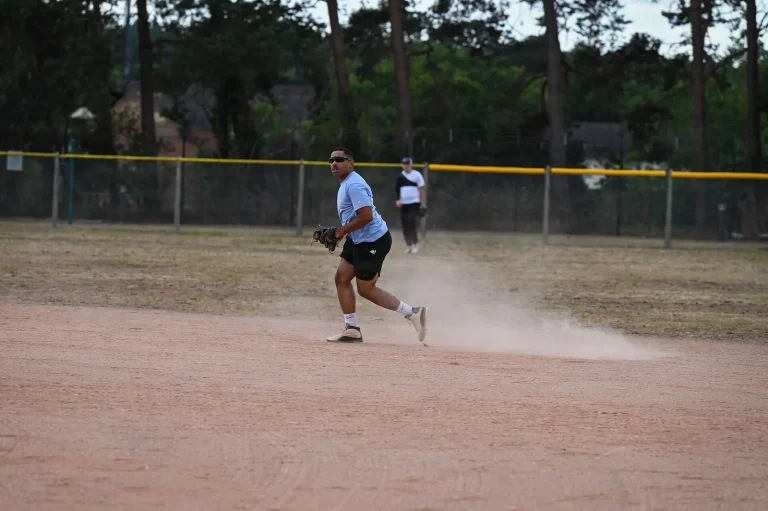
If the Games inspire you to join in, you could start running like a track athlete, or learn the basic rules of soccer, basketball and baseball, which all feature in Olympic competition in some form. Many neighbourhood groups also form through a casual local league, which captures some of the same spirit on a smaller scale.
Key takeaways
- Ancient Games began at Olympia, traditionally in 776 BCE.
- The modern Games were revived in Athens in 1896.
- Winter and Paralympic Games expanded the movement.
- Details of some ancient events and the end of the Games remain debated.
More sports stories are in our sports category.
Frequently asked questions
When were the first ancient Olympic Games?
Ancient sources traditionally date the first Games to 776 BCE at Olympia in Greece. Historians treat the exact origin as uncertain.
Who revived the Olympic Games?
Pierre de Coubertin led the effort to create a modern Games, and the first one was held in Athens in 1896.
Why are the Olympics held every four years?
The ancient Games were held in a four-year cycle called an Olympiad, and the modern Games kept that rhythm.
When did the Winter Olympics begin?
The first Winter Games were held in Chamonix, France, in 1924.
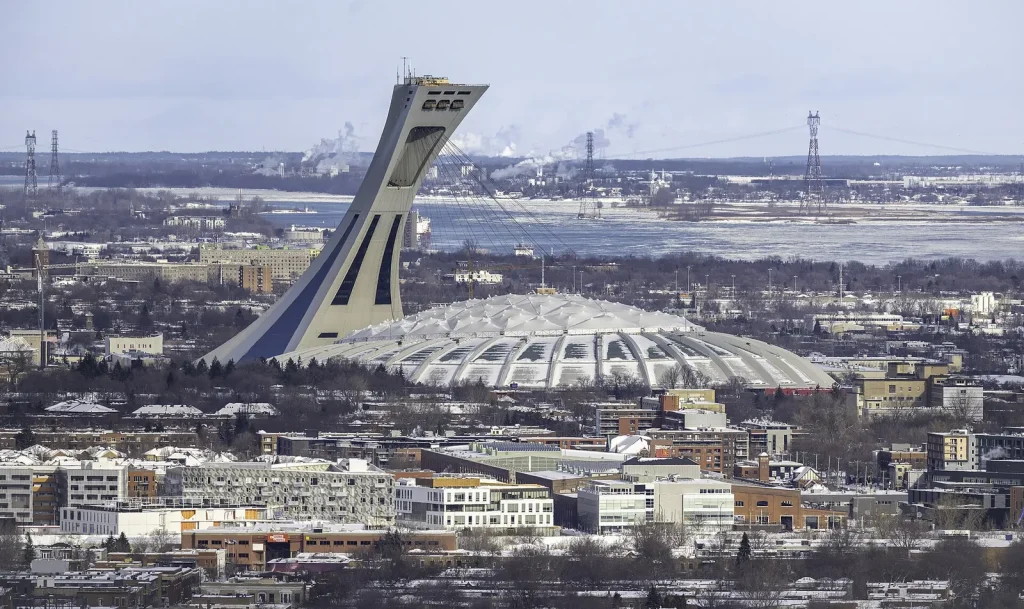
Photo: Aerial view of Olympic Stadium of Montreal by Wilfredor, CC0, via Wikimedia Commons