A starter freshwater aquarium needs a tank, a filter, a heater for most tropical fish, water treated for tap chemicals, and a few weeks of patience while the tank cycles. Only then should you add a small number of hardy fish.
Most beginner problems come from rushing. Fish are living animals with specific needs, so a slow, well-researched start pays off.
Pick a sensible tank size
Bigger tanks are usually easier than tiny ones, because water quality changes more slowly in a larger volume. Many beginners do well starting with a tank in the range of roughly 20 gallons (about 75 litres) or more. Very small bowls can be difficult to keep stable.
Place the tank on a strong, level stand, away from direct sunlight, radiators and drafts. A full tank is heavy, so be sure the furniture can bear the weight.
Essential equipment
| Item | Purpose |
|---|---|
| Filter | Moves water and houses helpful bacteria |
| Heater and thermometer | Keeps tropical species at a steady temperature |
| Lid or cover | Reduces evaporation and stops jumpers |
| Substrate | Sand or gravel for plants and decor |
| Water conditioner | Neutralizes chlorine and similar chemicals in tap water |
| Test kit | Checks ammonia, nitrite and nitrate levels |
Lighting is useful for viewing and for plants. Rinse substrate and decor in plain water, and avoid soap.
Set up your freshwater aquarium step by step
- Position and rinse the tank, then add substrate and decor.
- Install the filter and heater, but do not switch them on until the tank is filled.
- Fill with water and add conditioner as directed on its label.
- Turn on equipment and check that the temperature and flow are steady.
- Begin the cycling process and test regularly.
Understand the nitrogen cycle
Fish waste produces ammonia, which is toxic. Helpful bacteria in the filter convert ammonia to nitrite, which is also toxic, and then to nitrate, which is much less harmful and is removed by partial water changes and plants. Cycling means growing enough of those bacteria to handle waste before you add many fish.
The process often takes several weeks. You can test the water until ammonia and nitrite read zero and some nitrate appears. If you are not sure how to run the cycle, ask your local aquarium store or an experienced keeper.
Choose hardy fish and add them slowly
Research each species for adult size, temperament, tank size and temperature needs. Add a few fish at a time, rather than filling the tank on day one, so the bacteria can keep up.
Many beginners consider small, peaceful community fish, but compatibility depends on the species, so check each one. Avoid mixing aggressive and gentle fish, and remember some species need groups. Take your time choosing rather than buying on impulse.
Routine care
- Feed small amounts once or twice daily and remove uneaten food
- Do partial water changes on a regular schedule, using conditioned water of similar temperature
- Rinse filter media in old tank water, not tap water, so bacteria survive
- Check temperature and water behavior daily
- Watch fish for spots, clamped fins or labored breathing
If fish look unwell, contact an aquarium-experienced vet or a reputable fish professional. Keep a note of your tank’s routine, since a sitter will need it if you travel, as in our pet sitter checklist. Be careful about live plants as well: some are fine for fish, while others may harm pets that nibble them, so see the houseplants guide if cats or dogs share your home. Curious cats may also be tempted by tank lids, which is a good time to review indoor cat enrichment. More ideas live in the Pets category.
Common beginner mistakes
Overfeeding, overcrowding and skipping the cycle are the usual culprits. Cleaning everything at once is another, since scrubbing the filter and decor can wipe out helpful bacteria. Make changes slowly, keep notes on test results, and resist adding fish simply because the tank looks empty. A calm, steady approach gives you a healthier tank and fewer surprises.
Key takeaways
- Choose a larger tank when possible for easier stability
- Cycle the tank for several weeks before adding fish
- Add fish gradually and research compatibility
- Feed lightly and keep up regular partial water changes
This article is general information, not veterinary advice; please consult an aquarium-experienced veterinarian or qualified fish professional about your fish’s health and care.
Frequently asked questions
How long should I wait before adding fish?
Most guides recommend letting a new tank cycle for several weeks so helpful bacteria can establish. Test the water and add fish only when readings are stable.
Do I need to treat tap water?
Tap water often contains chlorine or chloramine, which can harm fish, so a water conditioner is commonly used. Check your local water and ask a reputable aquarium store.
How often should I feed fish?
Many keepers feed small amounts once or twice a day, only what fish finish in a couple of minutes. Overfeeding is a common beginner mistake.
Can I mix any fish together?
No. Species differ in size, temperament and water needs, so research each one before buying.
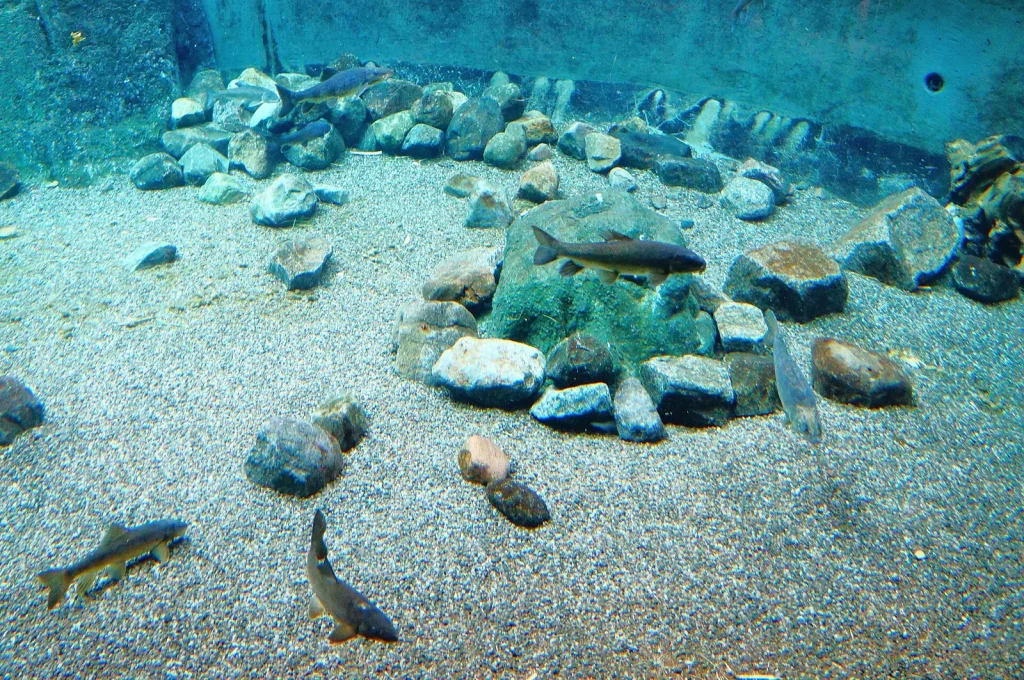
Photo: Fish swimming in freshwater aquarium – panoramio by Jiaqian AirplaneFan, CC BY 3.0, via Wikimedia Commons