Dog exercise needs vary with age, size, breed type and health, so there is no universal number of minutes. As a general rule, puppies need short, gentle bursts, healthy adults need daily walks and play, and seniors benefit from steady, lower-impact activity.
Your vet is the best guide for your own dog. The ideas below give a starting point and help you watch for the signs that a routine is working.
Why size is only part of the picture
People often assume small dogs need little exercise and large dogs need a lot. Reality is more mixed. Some small terriers are bursting with energy, while some giant breeds are happy with moderate walks.
Breed history is a better clue than weight. Herding, sporting and working dogs were bred to run and think for hours, while many companion breeds are content with shorter outings. Flat-faced breeds can overheat quickly and need extra care in warm weather.
Dog exercise needs by life stage
| Life stage | General approach |
|---|---|
| Young puppy | Short play and gentle walks, plenty of naps, no forced running or repetitive jumping |
| Adolescent | Gradually longer walks, training games and supervised play |
| Healthy adult | Daily walks plus off-lead or active play where safe, matched to breed type |
| Senior | Shorter, frequent walks, soft surfaces, gentle play |
Puppies
Growing bones and joints are still developing, so ask your vet what is suitable and when. Short sessions work best, followed by lots of rest. Check when your pup can safely go out and meet other dogs before heading to busy places; our new puppy guide covers early planning.
Adults
Most healthy adults do well with a mix of walking, sniffing, play and training across the day. Variety matters: a brisk walk, a game of fetch and a puzzle toy can each tire a dog in a different way.
Seniors
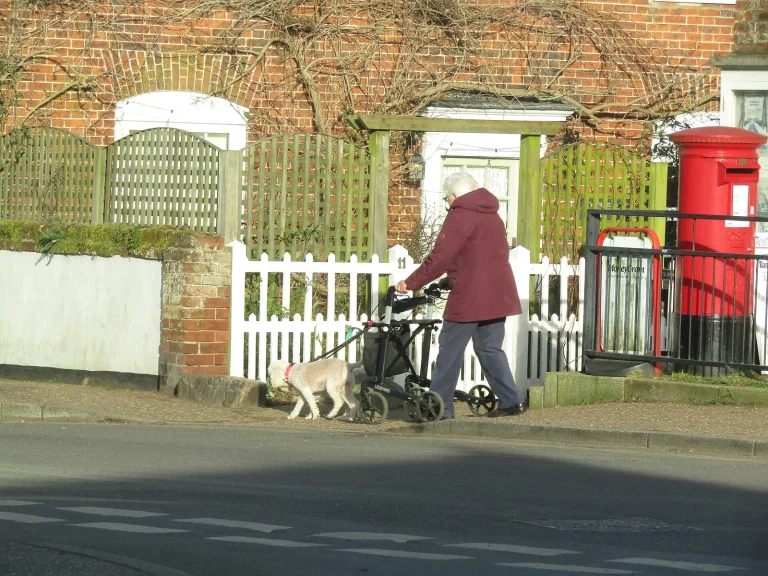
Older dogs often slow down, but they still need movement to stay supple. Choose gentle routes, avoid slippery floors and let your dog set the pace. If your dog seems stiff, slow to rise or reluctant to walk, mention it to your vet instead of assuming it is just age.
Examples by size
Small dogs
Short walks, indoor games and trick training can satisfy many small dogs. Watch for overheating in hot weather and tiring on long distances, and consider a harness rather than a collar if your vet recommends it.
Medium and large dogs
Many need longer daily outings and chances to run in safe, enclosed spaces. Build up distance gradually before long hikes, and avoid strenuous exercise right after meals unless your vet says otherwise.
Giant breeds
Moderate, regular walks usually suit better than intense bursts, particularly while joints are growing. Ask your vet about appropriate activity.
Beyond the walk: mental exercise
Sniffing is real work for a dog. A slow walk where your dog can investigate smells often satisfies as much as a fast one. Training sessions, food puzzles and hide-and-seek games add variety, especially in poor weather or for dogs with limits on running.
Reading your dog’s cues is part of this. Our article on dog body language explains the signs of excitement, stress and tiredness so you know when to push on and when to stop.
Weather and safety
Heat can be dangerous. Walk in the cooler parts of the day, carry water, and never leave a dog in a parked car. In cold or icy weather, shorten outings and dry your dog afterwards. Regular grooming also helps you spot sore paws or ticks, so see pet grooming at home for a simple routine. Related guides live in the Pets category.
A quick self-check after each outing
When you get home, notice how your dog behaves for the next hour. A pleasantly tired dog drinks, rests and settles. A dog who is still frantic may need more mental work, while one who limps, refuses food or seems unusually sore may have done too much. Keeping a small note on distance and recovery over a couple of weeks helps you spot patterns and gives your vet useful detail at checkups.
Key takeaways
- Breed type and life stage matter as much as size
- Keep puppy exercise short and gentle, and seniors steady
- Add sniffing and brain games to physical activity
- Stop and rest at signs of fatigue, overheating or pain
This article is general information, not veterinary advice; please consult your veterinarian about the right amount and type of exercise for your dog.
Frequently asked questions
Can a dog get too much exercise?
Yes. Overdoing it can lead to soreness, injury or heat problems, especially in puppies, seniors and flat-faced breeds. Build up gradually and watch your dog’s cues.
Do small dogs need walks?
Yes. Small dogs often have plenty of energy and benefit from walks, play and mental activity, even if their total distance is shorter.
Is mental exercise as tiring as physical exercise?
For many dogs, sniffing, puzzle feeding and training are surprisingly tiring and satisfying. They are a useful addition, especially on rainy days.
How do I know my dog has had enough?
Heavy panting that does not ease, lagging behind, lying down, limping or refusing to continue are signs to stop and rest. Contact your vet if concerned.
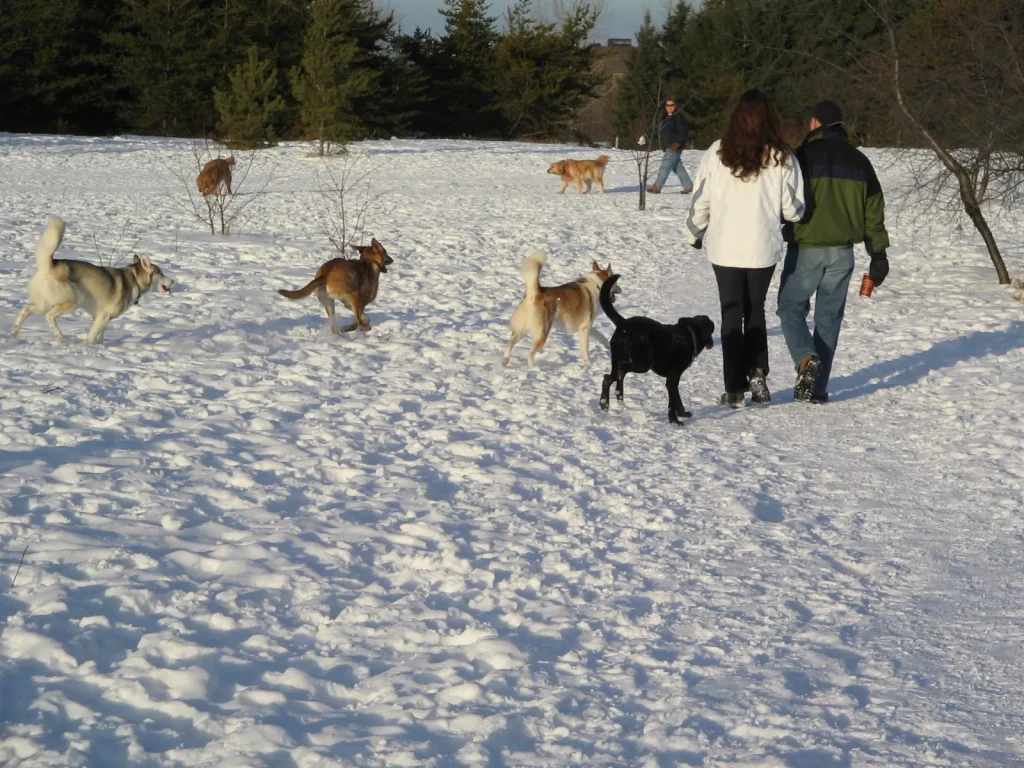
Photo: Dogs and people in snowy dog park by sarah n, CC BY 2.0, via Wikimedia Commons