Bastille Day, known in France as la Fête nationale, is observed on July 14 and commemorates both the storming of the Bastille fortress in 1789 and the national unity festival held a year later. It is France’s national day, and it is celebrated with parades, fireworks, dances and public meals.
The story is often shortened to a single event, but the holiday rests on two moments. Understanding both explains why the day feels part solemn, part festive.
What happened on July 14, 1789
The Bastille was a medieval fortress in Paris that had been used as a state prison. In July 1789 Paris was tense: food was costly, political debate was intense, and crowds were searching for weapons and gunpowder. On July 14 a crowd attacked the Bastille, and the fortress fell after hours of fighting.
Only a small number of prisoners were inside, so the practical impact was modest. The symbolic impact was enormous. The Bastille stood for royal authority, and its fall became a turning point associated with the start of the French Revolution.
The 1790 festival and the national holiday
On July 14, 1790, France held the Fête de la Fédération on the Champ de Mars in Paris. It celebrated national unity rather than the violence of the previous year, and many historians point to it as an important root of the modern holiday.
The date was officially adopted as the national holiday in 1880 under the Third Republic. Choosing July 14 allowed the country to honor both the revolutionary spark and the shared festival, which suited a nation looking for a unifying symbol.
| Year | Event | Why it matters |
|---|---|---|
| 1789 | Storming of the Bastille | Became a symbol of the Revolution |
| 1790 | Fête de la Fédération | Celebrated national unity |
| 1880 | National holiday established | July 14 became an annual observance |
How Bastille Day is celebrated today
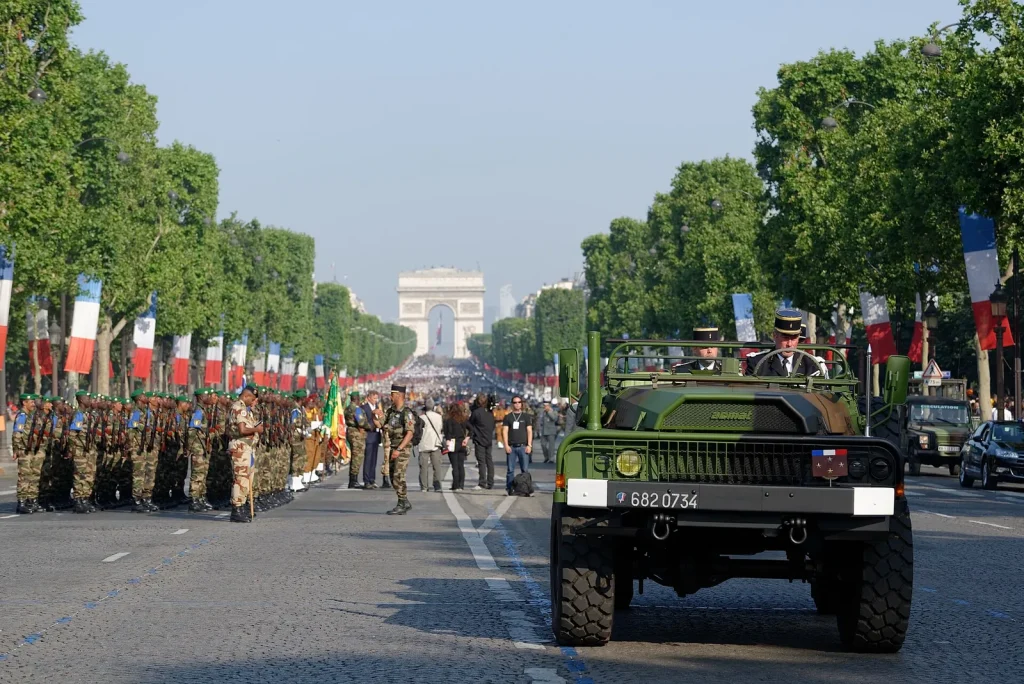
The centerpiece is the military parade along the Champs-Élysées in Paris, attended by the French president. Flyovers and marching units are a long-standing feature, and guests from partner countries are sometimes invited to take part.
Beyond Paris, towns hold fireworks, open-air concerts and the traditional bal des pompiers, a firefighters’ ball where the local fire station opens its doors for dancing. Many people simply gather for picnics and long meals.
Outside France
French communities and cultural groups around the world hold events as well. Cities with a strong French connection often host street festivals with food stalls, live music and games such as pétanque.
Ways to celebrate Bastille Day at home
You do not need a Paris parade to mark the day. A relaxed French-inspired evening can be built in a couple of hours.
- Set out bread, cheese, fruit and cold cuts for an informal picnic spread.
- Bake a simple tart or serve fresh berries in the colors of the flag, blue, white and red.
- Play French music, from classic chanson to modern pop.
- Watch a film set in France or learn a few phrases together.
- Try a game of pétanque in a park or backyard.
If you like planning themed evenings, our Fourth of July timeline adapts neatly to a smaller Bastille Day dinner, since both holidays revolve around outdoor food and an evening finale.
Common misunderstandings
People sometimes say the Bastille was full of political prisoners freed that day. In reality only a handful of prisoners were held there. Another confusion is calling the holiday “French Independence Day,” which does not fit because France was not gaining independence from another country. It is more accurate to call it the national day.
The anthem is La Marseillaise, and the motto Liberté, égalité, fraternité is often heard in speeches on the day. Both are tied to the revolutionary period, though they became official national symbols over a longer span.
Reading and watching to go deeper
If the history interests you, look for general histories of the French Revolution in your library, or documentaries that cover Paris in 1789. Museums in Paris, including those devoted to the city’s history, display objects from the period. Reading accounts by different historians is worthwhile because interpretations of the Revolution differ, and the Bastille’s symbolic role has been discussed and debated for more than two centuries.
For a fall counterpart with its own origin story, our Veterans Day explainer traces another date back to a single moment in history.
Key takeaways
- Bastille Day is observed on July 14 and is France’s national day.
- It links the 1789 storming of the Bastille with the 1790 unity festival.
- The holiday was officially established in 1880.
- At home, a picnic, French music and a game of pétanque are enough.
Another summer observance with a very different origin is International Friendship Day, and more dates are listed in the Holidays & National Days category.
Frequently asked questions
Is Bastille Day the same as French Independence Day?
Not exactly. The holiday is France’s national day, and it commemorates the 1789 storming of the Bastille and the 1790 unity festival rather than independence from another country.
When is Bastille Day observed?
It is observed on July 14 every year.
What is the French name for Bastille Day?
In France it is called la Fête nationale, or sometimes le Quatorze Juillet, which simply means the fourteenth of July.
How do people celebrate it?
Typical events include the Paris military parade, fireworks, public dances and picnics. Many towns also hold local concerts and firefighters’ balls.
Photo: Champs-Elysees Bastille Day 2013 Paris t090858 by Marie-Lan Nguyen, CC BY 2.5, via Wikimedia Commons