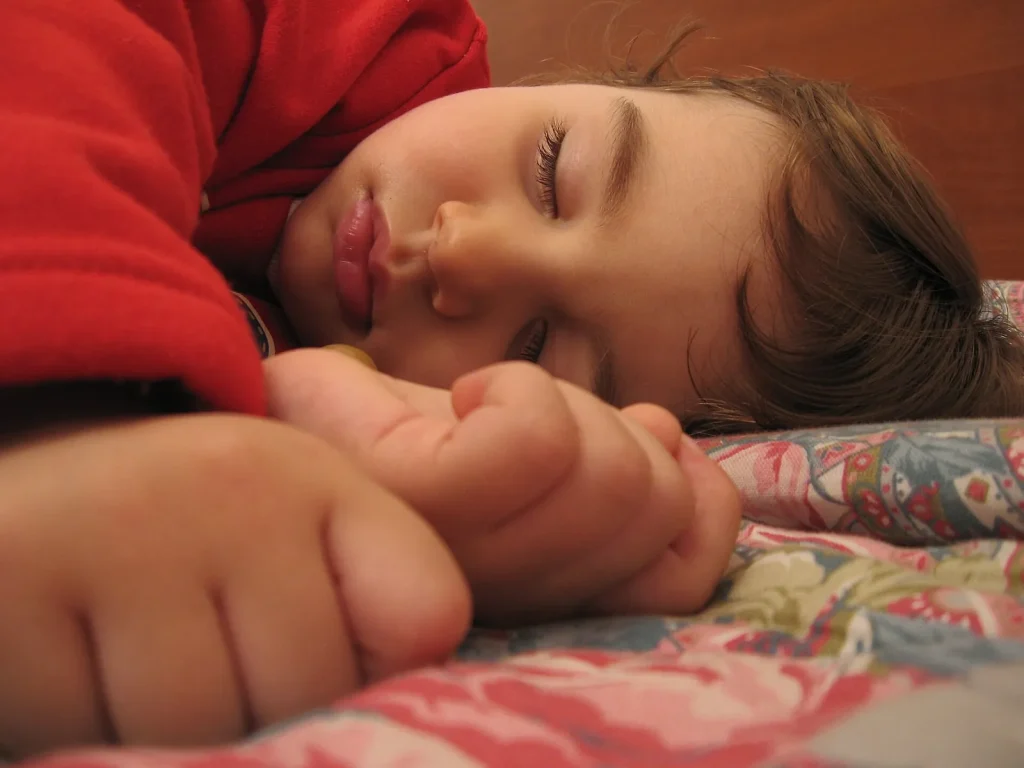
A good bedtime routine for kids is a short, predictable sequence of calming steps, done in the same order at roughly the same time each night. Twenty to forty minutes is typical. Consistency matters more than perfection, and the details can be adapted to your family.
Why routines help
Children often feel more secure when they know what comes next. A familiar sequence signals that the day is winding down, so bedtime feels like a rhythm rather than a negotiation. It can also reduce the evening back-and-forth, since the plan is already set.
Every child is different, and so is every household. Shift work, siblings and busy weeks all shape what is realistic, so treat the ideas here as a menu, not a rulebook.
A sample sequence to adapt
- Wind down the environment. Dim lights, turn off the TV and put away noisy toys.
- Bath or wash-up. Warm water, pajamas and teeth.
- Tidy together. A quick two-minute clear-up of the day’s toys.
- Quiet time. A story, soft music or a calm chat in bed.
- Goodnight ritual. A song, a phrase or a cuddle, then lights out.
Keep it to steps you can sustain even on the hardest night. A routine you can do in 20 minutes at a friend’s house will hold up better than an elaborate one.
Setting up your bedtime routine for kids by age
| Stage | What often works |
|---|---|
| Toddlers | Short, repeated steps, a favourite book, a comfort item |
| Preschoolers | Picture chart of steps, simple choices such as which pajamas |
| School age | Bedtime tied to wake-up time, reading in bed, a clear lights-out |
| Older children and teens | Phone-free wind-down, flexibility within agreed limits |
Pediatric sleep guidance generally recommends age-appropriate amounts of sleep, and your child’s doctor can tell you what suits your child. Pick a bedtime by counting back from the time your child needs to wake for the morning.
Handle common hiccups
Stalling and "one more" requests
Build the extras into the routine. A last drink, a last trip to the bathroom and one last hug can all come before lights out, so extra requests have an answer: "We already did that one."
Fear of the dark
A soft night light, a quick check of the room together, or a favourite stuffed toy can help many children feel safe. Stay calm and warm, and avoid dismissing the worry.
Getting out of bed
Return the child to bed with minimal talk and a calm, consistent message. It may take several nights before the pattern settles.
Screens and the evening
Bright screens close to bedtime make winding down harder for many people. Many families set a screen-free window before bed and keep devices out of bedrooms. Our guide to setting screen-time boundaries has more on how to agree on limits that hold.
Make the routine visible and shared
Children cooperate more when they have a say. Let them choose the book or the pajamas, and make a simple picture chart they can tick. A reward chart with small stickers also works, and the same principle appears in our chore charts by age guide. If a new baby is on the way, keep the routine steady while things change, as suggested in preparing kids for a new sibling. You will find more family guides in our Parenting archive.
This is general information, and children differ. It is not medical advice or a developmental assessment. If you have concerns about your child’s sleep or wellbeing, talk to your pediatrician or another qualified professional.
Troubleshooting a changing routine
Routines need updating. A holiday, an illness, a house move or a new baby can all disrupt the pattern, and that is normal. When things go off track, return to the basics as soon as possible and keep the same order of steps, even if the timing slips. Give older children a little more say as they grow, such as choosing their own reading time. If one parent handles most evenings, write the steps down so any caregiver can follow them. Keep your tone steady and warm, since your calm is often the most effective part of the routine. A routine that bends without breaking is the one that survives childhood.
Key takeaways
- Keep the routine short, calm and in the same order each night.
- Work backward from the morning wake-up time to set bedtime.
- Fold last requests into the routine to head off stalling.
- Adjust as your child grows and as family life changes.
Frequently asked questions
How long should a bedtime routine take?
Many families find 20 to 40 minutes works well. The aim is a steady, unhurried wind-down rather than a set number of minutes.
What if my child resists every night?
Stay consistent, keep your tone calm and give small choices within the routine. Changes often take a week or more to settle in.
Should the routine be the same on weekends?
Keeping it close to the usual helps, though a little flexibility is fine. Wild swings in timing can make Monday harder.
When should I ask for professional advice?
If you are worried about your child’s sleep or health, speak with your pediatrician, who can consider your child’s individual situation.
Photo: A child sleeping by Alessandro Zangrilli, Public domain, via Wikimedia Commons