To organize a small kitchen, clear everything out, keep only what you use, group items by task, and store them where you use them. Then build upward with shelves, rails and hooks. The steps below work in a studio galley or a tight family kitchen alike.
Start by emptying and editing
Take everything out of one cupboard or drawer at a time. Wipe the empty space, then sort the contents into three piles: use weekly, use occasionally, and has not been touched in a year.
Be honest about duplicates. Three spatulas earn their place; seven do not. Donate or relocate seldom-used gadgets, such as a turkey roaster or party platters, to a hall cupboard or the top shelf.
Divide the space into zones
Kitchens run on a few repeated tasks, and storing items near their task saves steps. Most small kitchens need five zones.
- Prep: knives, chopping boards and mixing bowls near the main counter.
- Cooking: pans, oils, spices and spatulas close to the hob.
- Cleaning: detergent, brushes and cloths by the sink.
- Serving and eating: plates and cutlery near the dishwasher or drying rack.
- Food storage: pantry items and containers grouped together.
Place the daily-use items between hip and shoulder height. Heavier or rarely used things go lower or higher.
Use vertical space to organize a small kitchen
Floor area is limited, but walls and cupboard height often are not. A few additions make a large difference.
| Addition | What it solves |
|---|---|
| Wall rail with hooks | Frees drawers by hanging utensils and pans |
| Shelf risers | Doubles usable height inside cupboards |
| Over-door rack | Holds wraps, foil and cleaning supplies |
| Magnetic strip | Keeps knives off the counter safely |
| Slim rolling cart | Adds movable storage in a narrow gap |
When fitting anything heavy to a wall, use appropriate fixings for the wall type and check for hidden pipes and cables first. If you are unsure, or the job involves electrical wiring or load-bearing structure, hire a qualified tradesperson.
Tame drawers, the pantry and the fridge
Drawer dividers stop utensils from becoming a tangle. In the pantry, decant staples such as rice and pasta into clear, stackable containers and label them with the contents and, if useful, the date opened. Keep a small basket for open snack packets.
In the fridge, group like with like and keep a first-in, first-out habit by putting newer items behind older ones. A wipe-down before the weekly shop keeps things fresh. Unwanted scraps can feed a compost bin rather than the rubbish.
Keep counters almost clear
Counter space is the scarcest resource in a small kitchen. Leave out only what you use daily, such as a kettle, a chopping board and perhaps a knife block. Everything else goes away.
Resist buying storage before you edit. Containers filled with things you do not need still leave you with a cluttered kitchen. Once the space is tidy, a recurring clean becomes easier, and our deep cleaning schedule shows how to handle the ovens, the extractor and the cupboard interiors. Cooks with a sunny windowsill might also add herbs, as described in our beginner vegetable garden guide. Browse more in the Home & Garden category.
Habits that keep it organized
- Put things back in their zone straight after use.
- Do a five-minute reset each evening.
- Review one cupboard a month and remove what you do not use.
- Pause before any new gadget and ask where it will live.
Small changes with big effects
Not every improvement needs a purchase. Turn mugs upside down and hang them on hooks under a shelf, or store lids vertically in a magazine holder. Move rarely used appliances to a hall cupboard and keep only the ones you reach for weekly. Put a tray under oils and sauces so that bottles can be lifted out in one go and the shelf stays clean. Label shelves if several people share the space, so everyone knows where things belong. Take a photo of a tidy cupboard as a reference; it makes resetting quick on a busy evening. Small, cheap steps like these often outperform a large storage purchase.
Key takeaways
- Edit first, then organize; storage cannot fix too much stuff.
- Group items by task and keep them near where they are used.
- Go vertical with rails, risers and over-door racks.
- Keep counters nearly clear and reset daily.
Frequently asked questions
Where should I begin in a tiny kitchen?
Begin with one drawer or cupboard. A small, finished success builds momentum and shows how much you can free up.
How do I store pots and pans in limited space?
Hang them on a wall rail or stack nesting pans with felt or cloth between them. Lids can sit on a rack inside a cupboard door.
Are open shelves a good idea?
They help in tight spaces because they feel lighter and keep daily items in reach. They do need regular dusting and a tidy look.
Do I need a professional to install wall storage?
Simple shelves and rails are a common DIY task, but get a qualified tradesperson for anything involving wiring, gas lines or structural walls.
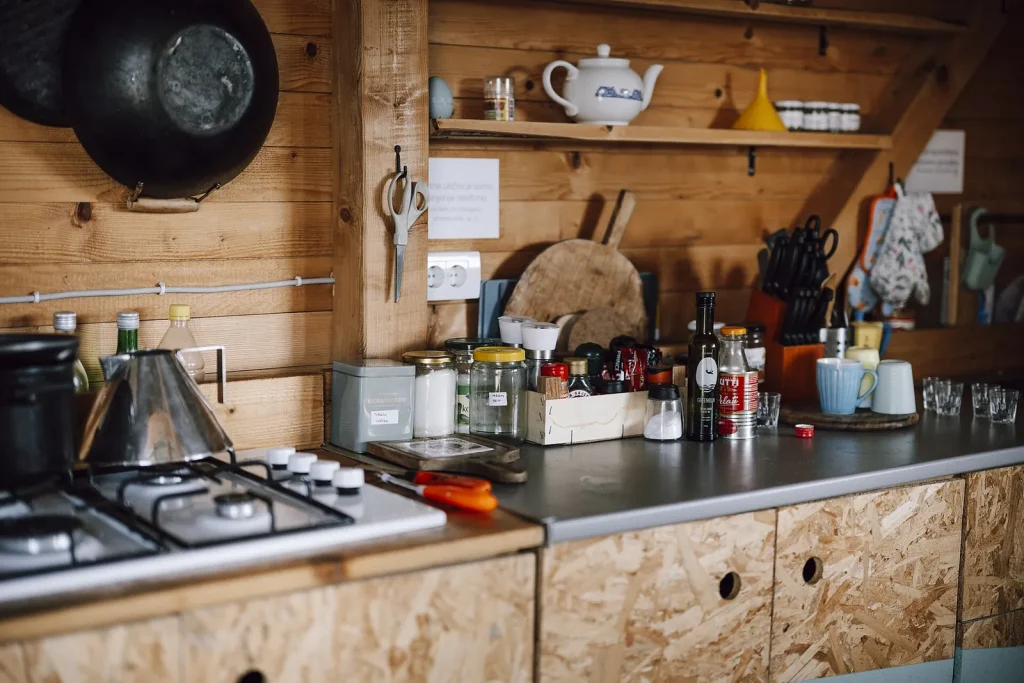
Photo: Small kitchen with cooking tools and jars on countertop near wooden shelves and… by Shixart1985, CC BY 2.0, via Wikimedia Commons