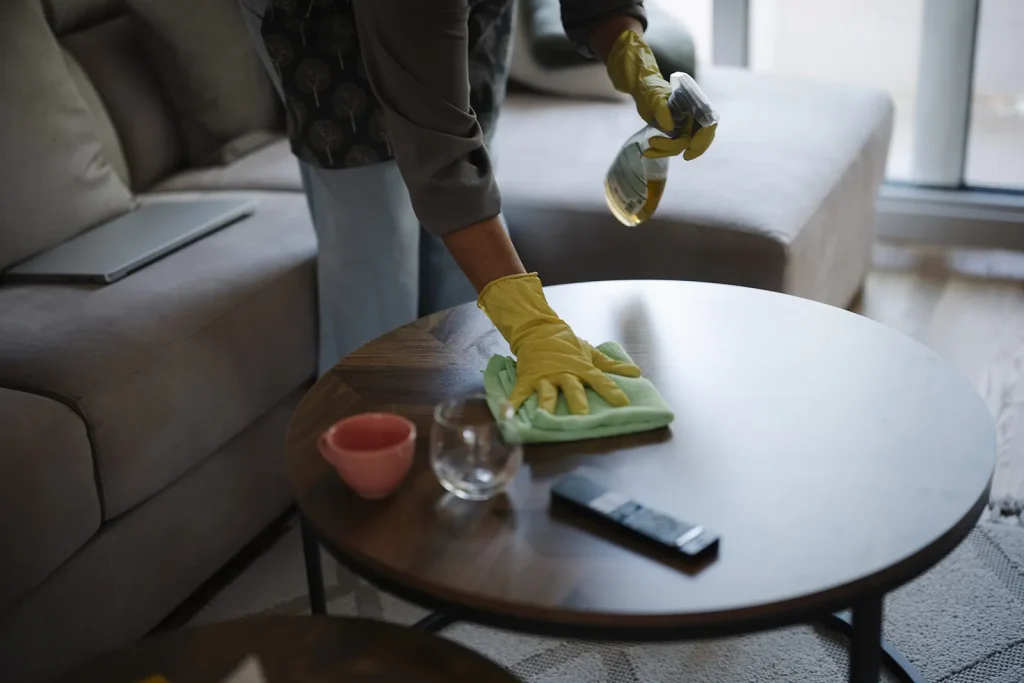
A good deep cleaning schedule breaks the big jobs into weekly, monthly, seasonal and yearly rounds, so you never face the whole house at once. Routine tidying keeps surfaces fine; the schedule catches the things that quietly build up, like grease on the hob hood or dust behind the sofa.
Why a deep clean needs a calendar
Surface cleaning handles what you can see. Deep cleaning handles what you cannot: behind appliances, inside the oven, under the mattress. These jobs are easy to forget, and they are exhausting when saved up for one marathon day.
A calendar solves both problems. Each task has a home, and each session is short enough to finish before you lose patience.
Set up your deep cleaning schedule
Start with a list of every task you can think of, then sort it by how fast it gets dirty. Kitchen counters and the bathroom sink need attention constantly. A window frame or a refrigerator coil does not.
Next, assign tasks to a rhythm and pin it somewhere visible. A phone reminder or a note on the fridge both work. Choose one small deep-clean task for each week rather than ten in a month.
| Frequency | Example tasks |
|---|---|
| Weekly | Change bed linen, vacuum, mop hard floors, clean toilets and showers |
| Monthly | Wipe inside the microwave, clean the washing machine drum, dust vents and skirting boards |
| Every 3 months | Clean the oven, wash the bins, vacuum the mattress, descale the kettle |
| Twice a year | Wash windows, flip mattresses where advised, clean behind and under furniture |
| Yearly | Shampoo carpets or rugs, wash curtains, tidy the garage or shed |
Room-by-room priorities
Kitchen
Grease and food residue are the main targets. Degrease the hob hood and cupboard fronts, empty and wipe the fridge shelves, and clean inside the oven following the manufacturer’s instructions. Pull out lightweight appliances to clean around them.
Bathroom
Damp is the enemy here. Scrub grout, wash the shower curtain or screen, and clean the extractor fan cover. Leave a window open or run the fan after showers to slow mould.
Bedrooms and living areas
Dust collects on ceiling fans, picture rails and the tops of wardrobes, so work from high to low. Vacuum upholstery and wash cushion covers where labels allow.
Sensible safety habits
Never mix cleaning products, especially bleach with anything containing ammonia or acids, as this can release harmful fumes. Read labels, ventilate the room, and keep products in their original containers away from children and pets.
- Use a stable step stool, not a wobbly chair, for high spots.
- Switch appliances off and unplug them before cleaning around them.
- Wear gloves for harsher products and test new cleaners on a hidden patch.
Make it stick
Keep a caddy stocked with a few basics: microfibre cloths, a scrub brush, a multi-surface cleaner and a bucket. Play music, set a 20-minute timer and stop when it rings. If you share a home, divide tasks fairly and rotate the unloved ones.
Some jobs overlap with bigger upkeep. Window washing and gutter checks fit naturally with a seasonal home maintenance checklist, and clearing cupboards goes faster once you organize a small kitchen. If a repaint is planned, deep clean first, then see how to paint a room. You will find more in the Home & Garden section.
This is general household information. For specialist cleaning of mould, asbestos, or hazardous materials, or if anyone in the home has health sensitivities, consult a qualified professional.
Adjusting for your household
The table above is a starting point, not a standard. A home with pets, toddlers or allergy sufferers may need vacuuming and bedding changes more often, while a single-person flat might stretch some tasks further. Begin by writing down the two or three jobs that bother you most, such as sticky cupboard fronts or dusty blinds, and place them early in your calendar. If a month goes badly, skip ahead rather than trying to catch up with a marathon. A schedule is there to serve you, so edit it whenever life changes, and mark finished tasks so you can see progress over the year. Seeing a month of ticked boxes is surprisingly motivating, and it makes the next round feel familiar rather than daunting.
Key takeaways
- Split deep cleaning into weekly, monthly, seasonal and yearly rounds.
- Work high to low, and finish with the floors.
- Never mix cleaning products, and ventilate while you work.
- Short sessions with a timer beat a single exhausting day.
Frequently asked questions
How often should I deep clean my whole home?
There is no single rule. Most households do a few rooms or tasks each week, with larger jobs such as ovens and windows every few months.
What should I deep clean first?
Start with the kitchen and bathroom, where grease and damp make the biggest difference to hygiene and appearance.
Do I need special products?
Usually not. Warm water, a mild detergent, microfibre cloths and a good scrub brush handle most jobs. Choose a specialist cleaner only where the manufacturer recommends one.
Should I hire help for big jobs?
It can be worth it for tasks such as carpet cleaning, high windows or heavy mould. A reputable professional brings equipment and experience.
Photo: Cleaning a coffee table at home with cleaning supplies and worn furniture by Shixart1985, CC BY 2.0, via Wikimedia Commons