The easiest approach to packing outfits for a trip is to pick one colour palette, decide how many outfits you need, and choose pieces that all combine with one another. Do this and a carry-on can cover a week or more. Follow the steps below, in order, and you will rarely overpack again.
Packing outfits for a trip: gather the facts first
Before you touch a suitcase, list what the trip actually involves. Note the length of the stay, the forecast, the activities and any occasions with a dress code. Check whether laundry will be available, because a mid-trip wash can halve what you carry.
This is the same audit used for a capsule wardrobe, only compressed into a few days. If you are heading somewhere with unpredictable conditions, our advice on how to dress for different weather will help you plan layers.
Be honest about your habits, too. If you tend to change clothes twice a day or want a different outfit for every dinner, build that into the numbers now rather than discovering it halfway through the trip.
Step two: choose a palette
Select two or three base colours and one accent, and refuse anything that does not fit. When every top works with every bottom, you need fewer pieces and can create more combinations. Neutrals such as navy, grey, cream and tan are reliable, and our guide to colour matching basics explains why they combine so easily.
Avoid packing for the version of yourself who might go to the gym, hike or attend a fancy dinner unless those plans are actually booked. Duplicating a favourite, comfortable outfit is nearly always wiser than adding a one-off item.
Step three: use a simple formula
Packing by formula stops you from throwing in random extras. A common approach is to multiply tops by bottoms and add layers.
| Trip length | Tops | Bottoms | Layers | Shoes |
|---|---|---|---|---|
| Weekend (2-3 days) | 3 | 1-2 | 1 | 2 |
| One week | 5 | 2-3 | 2 | 2-3 |
| Two weeks or more | 6-7 | 3 | 2-3 | 3 |
These are starting points, not rules. Add a dressier option if you expect a smart evening, and subtract if laundry is easy. Three tops and two bottoms, for instance, already create six different outfits.
Shoes are the heaviest and bulkiest items, so they deserve the most scrutiny. A comfortable pair for walking and one slightly smarter pair cover almost every situation. If both can handle a rainy day, you may not need a third.
Step four: test before you pack
Lay everything out on the bed and build outfits from it. Every item should appear in at least three combinations. If a piece works with only one other thing, leave it at home.
Try the outfits on if you are unsure. Clothes that are uncomfortable at home will not improve on the road, and a good fit matters when you will be walking all day, as covered in how clothes should fit.
Step five: pack smart
Wear your bulkiest items, such as boots and the coat, on the journey. Roll soft tops and knitwear, and fold structured shirts and trousers flat. Packing cubes keep categories separate and make a hotel drawer unnecessary.
- Put shoes at the base, near the wheels, and stuff socks inside them
- Keep a spare outfit and any essentials in your carry-on
- Pack a small laundry bag for worn clothes
- Bring one versatile scarf or wrap, which doubles as a layer
Check airline cabin limits before you leave, since they change by carrier and route.
On the return journey, leave room. A small amount of empty space in the case means souvenirs fit without a struggle, and a quick last-day check of drawers, bathrooms and chargers saves lost items. Write a short packing list once and keep it saved, so the next trip begins with a template instead of a blank page.
Toiletries deserve a quick review as well. Decant what you need into small containers, check liquid limits for flights and share items such as hair dryers with travelling companions. A short list of chargers, adapters and documents kept in one pouch prevents the classic last-minute search.
Key takeaways
- Start with the trip facts: length, weather, activities and laundry.
- One palette makes everything combine.
- Use a tops-times-bottoms formula rather than guessing.
- Each item should work in at least three outfits.
- Find more wardrobe planning ideas in our fashion archive.
Frequently asked questions
How many outfits do I need for a week away?
Five to seven tops with two or three bottoms and a couple of layers usually covers a week. If laundry is available you can pack less.
Is rolling or folding clothes better?
Rolling suits soft items such as t-shirts and knits, while folding keeps structured pieces like blazers smooth. Many travellers use a combination.
How do I avoid wrinkles?
Choose wrinkle-resistant fabrics, pack items flat or in tissue, and hang clothes in a steamy bathroom after arriving.
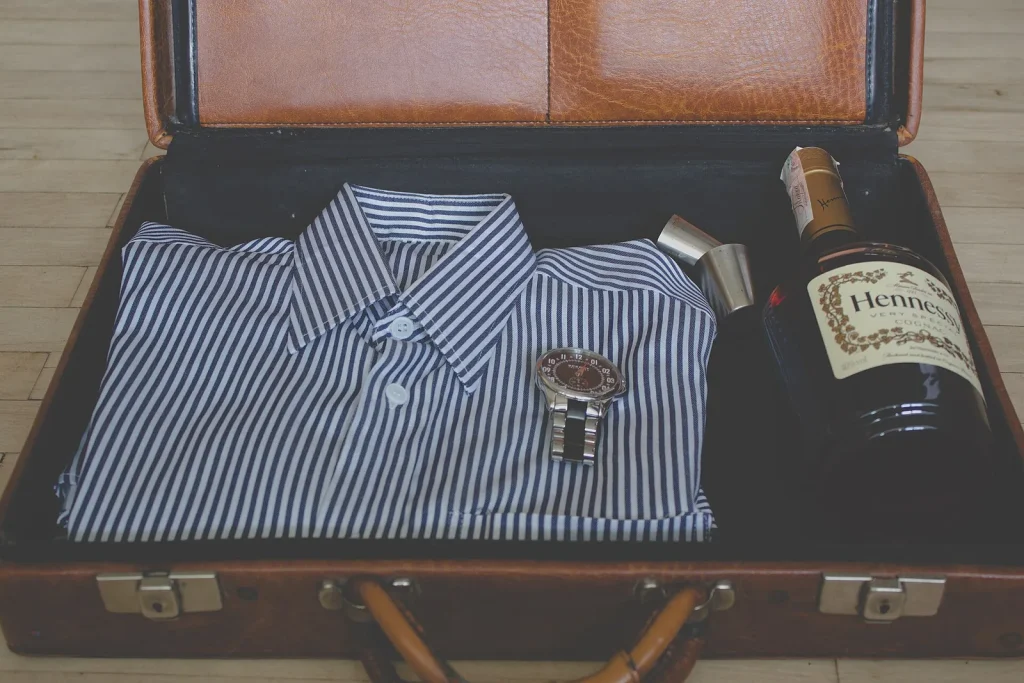
Photo: Packing for a business trip by Angelina Litvin linalitvina, CC0, via Wikimedia Commons