Wondering how clothes should fit? They should fit so that seams sit where your body naturally changes direction, fabric lies smooth without pulling, and you can move freely. That means shoulder seams on the shoulder bone, sleeves ending at the wrist and trousers that skim rather than strain. Use the checklist below next time you are in a fitting room.
Why how clothes should fit matters more than price
A modest shirt that fits well looks sharper than a costly one that does not. Proportion is what people notice first, even if they cannot say why. Good fit also helps comfort, since clothes that are too tight restrict movement and clothes that are too loose bunch and twist.
Fit is also the quickest way to make a smaller wardrobe feel considered, which is a theme running through our guide to building a capsule wardrobe.
Tops, shirts and jackets
Start at the shoulders, because they are the hardest area to alter. The seam should sit at the edge of the shoulder, not drooping down the arm or creeping up toward your neck.
- Collar: you should be able to slide a finger or two between collar and neck
- Chest: the fabric should lie flat, with no horizontal pulling across the buttons
- Sleeves: shirt cuffs end at the wrist bone, while jacket sleeves show a little shirt cuff
- Length: a jacket should cover the seat, and a casual shirt untucked should end around mid-zip
Raise your arms in the fitting room. If the whole garment lifts with you, the armholes may be too tight.
Fabric choice changes how a cut behaves. Stretch cotton forgives movement, while stiff wool holds its shape and needs more precise tailoring. Knitted fabrics relax with wear, so a knit that feels snug in the shop may loosen within a few days.
Trousers, jeans and skirts
The waist should sit comfortably without a belt doing all the work. Sit down, bend and walk a few steps to test it. The seat and thigh should have room without sagging.
Hem length is a style choice. A straight trouser typically rests lightly on the shoe with a slight break, while a tapered or cropped cut stops at or above the ankle. Skirts look best when the hem finishes at a deliberate point, such as just above or below the knee, or at mid-calf.
Quick reference
| Area | Good sign | Warning sign |
|---|---|---|
| Shoulders | Seam on the shoulder edge | Seam drooping onto the arm |
| Chest and waist | Lies flat and moves with you | X-shaped pulling at buttons |
| Sleeves | End at the wrist | Cover the hand or stop mid-forearm |
| Trousers | Smooth seat, clean line to hem | Whiskering, bagging or digging in |
| Length | Intentional, consistent hem | Awkward in-between length |
What a tailor can and cannot fix
Tailoring is often cheaper than people expect, and it can turn a decent garment into a great one. Hems, sleeve lengths, waistbands and side seams are usually simple jobs. Taking in a jacket body is also common.
Shoulders, major changes to chest width and altering a heavily structured garment are difficult and sometimes impossible. As a rule, buy for the parts that cannot be changed and tailor the rest. That mindset also supports good habits like knitwear care, because well-fitting pieces deserve to last.
Fitting-room routine that works
Bring the shoes and a similar top or bottom to what you will actually wear with the item. Move around, sit, reach and check the back view in a second mirror or a phone photo.
Sizes vary widely between makers, so ignore the number on the label and trust the mirror. Fit also depends on the occasion, since a relaxed weekend shirt can be roomier than office wear. If you are aiming for a specific formality, our explainer on dress codes can help you choose the right cut.
Keep a note on your phone listing the sizes and brands that fit you well. It saves time when shopping online, where you cannot try before you buy, and helps you spot patterns in the cuts that suit your body.
Key takeaways
- Check shoulders first, because they are hard to alter.
- Fabric should lie smooth without pulling or sagging.
- Hems and sleeves are quick, affordable tailoring fixes.
- Ignore the size label and trust how the garment moves on you.
- See more practical advice in our fashion category.
Frequently asked questions
Should I size up or down if I am between sizes?
Choose the size that fits the hardest-to-alter area, usually the shoulders for tops and the hips for trousers. The rest can often be adjusted by a tailor.
Is baggy clothing the same as bad fit?
No. Oversized styles are a deliberate choice with proportion in mind, such as a roomy top with slimmer trousers. Bad fit is accidental, with fabric pulling or hanging awkwardly.
How much does tailoring usually cost?
Prices vary by location and the type of work. Simple jobs like hems cost much less than structural changes, so ask for a quote before committing.
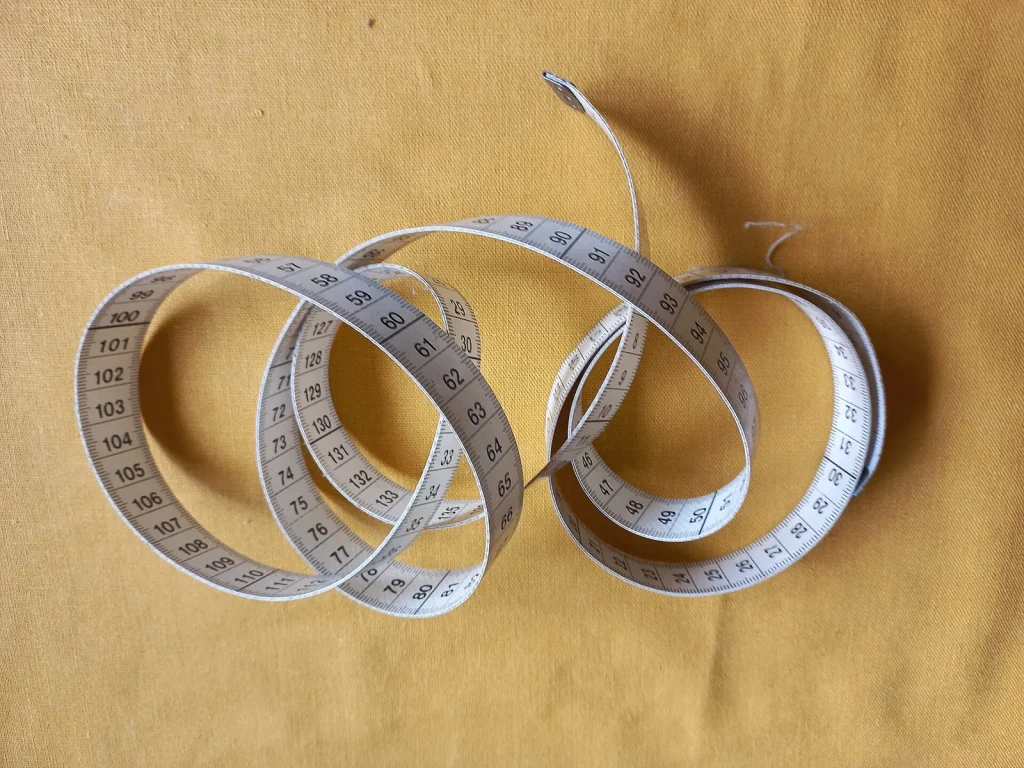
Photo: Dornbirn-Ebnit-Tape measure-01ASD by Asurnipal, CC BY-SA 4.0, via Wikimedia Commons