To choose a watch well, decide first how you will wear it, then match the size, movement and strap to that purpose. A simple, well-proportioned watch you reach for daily beats a showy one that stays in a drawer. The sections below cover each decision in order.
Choose a watch by how you will wear it
Picture the days you will wear it. A desk job with the occasional smart event suits a slim dress watch, while an outdoor weekend lifestyle calls for something sturdier and water-resistant. If you want one watch for everything, a clean field-style design in a neutral colour is the usual compromise.
Think of the watch as part of your overall look. A neutral dial and a strap that suits your regular shoes will go with most outfits, much like the base pieces in a capsule wardrobe.
Understand the movement
The movement is the mechanism inside, and the three common types behave differently.
| Type | How it works | Good to know |
|---|---|---|
| Quartz | Battery-powered, regulated by a quartz crystal | Accurate, low maintenance, battery change every few years |
| Mechanical (manual) | Wound by hand using the crown | Needs regular winding and periodic servicing |
| Automatic | Self-winding from wrist motion | Keeps running while worn, may stop if left unused |
| Smartwatch | Digital display with apps and sensors | Needs frequent charging and software updates |
Neither quartz nor mechanical is better in absolute terms. Quartz offers convenience and accuracy, while mechanical watches appeal to people who enjoy craftsmanship.
Get the size right
Case diameter is the number most people notice, but proportion matters more than the figure. Many dress watches fall between about 34 and 40 millimetres, while sports watches often run larger. Thickness is just as important, since a thin case slides under a shirt cuff.
- Compare the lug-to-lug length, which is the distance from top to bottom of the case, with the width of your wrist
- The case should not overhang the sides of your wrist
- Try it on with a long-sleeved shirt to check it fits under the cuff
Fit is again the deciding factor, as it is with clothing; our checklist on how clothes should fit uses the same logic.
Pick a strap that matches your routine
Leather straps look refined but dislike water and sweat. Steel bracelets are tough and go from casual to formal, and fabric or rubber straps are comfortable and easy to wash for active days. Straps are usually swappable, so one watch can change character with a quick strap change.
Match metals sensibly with your other accessories. Steel and silver tones suit cooler palettes, while gold or bronze suits warmer ones.
Test the clasp and buckle too, because a strap that pinches or slips quickly becomes irritating. Wear the watch for a few minutes in the shop, move your wrist and check that the dial is easy to read at a glance.
Features worth paying for
Before you buy, check the practical details that affect daily life.
- Water resistance: a rating suitable for splashes is enough for most people, while swimming needs a higher rating
- Crystal: sapphire resists scratches better than mineral glass
- Legibility: clear numbers or markers and good contrast
- Date window: useful for some, clutter for others
Skip complications you will never use. A chronograph is fun, but it adds cost and visual busyness.
Set a budget and shop wisely
Decide your ceiling before you browse, and remember that the best-value options are often unfussy. Secondhand watches can offer excellent quality, but check condition and the seller’s return policy. Buying fewer, better things is also a gentle path toward more sustainable habits, as discussed across our fashion section.
Finally, think about formality. If you attend events with a stated dress code, a slim watch with a leather strap is a safe pick, as explained in our guide to dress codes.
Looking after a watch is easy. Wipe it with a soft cloth, keep it away from strong magnets and heat, and have a mechanical model serviced at the intervals the maker suggests. A little care means it can be worn and passed on for decades.
Key takeaways
- Start with how and where you will wear the watch.
- Quartz is low-maintenance; mechanical rewards enthusiasts.
- Check case size, thickness and strap comfort on your wrist.
- Choose features you will really use and skip the rest.
Frequently asked questions
What is the best first watch to buy?
A simple three-hand watch with a clean dial, in a neutral colour, suits most situations. Pair it with a strap you can change.
Do I need a luxury watch?
No. Many affordable watches keep excellent time and look good. Luxury is mostly about craftsmanship, heritage and personal taste rather than necessity.
Can I wear a watch with a different metal to my jewellery?
Yes. Mixing metals is common as long as the overall look feels deliberate, for instance by repeating each metal at least twice.
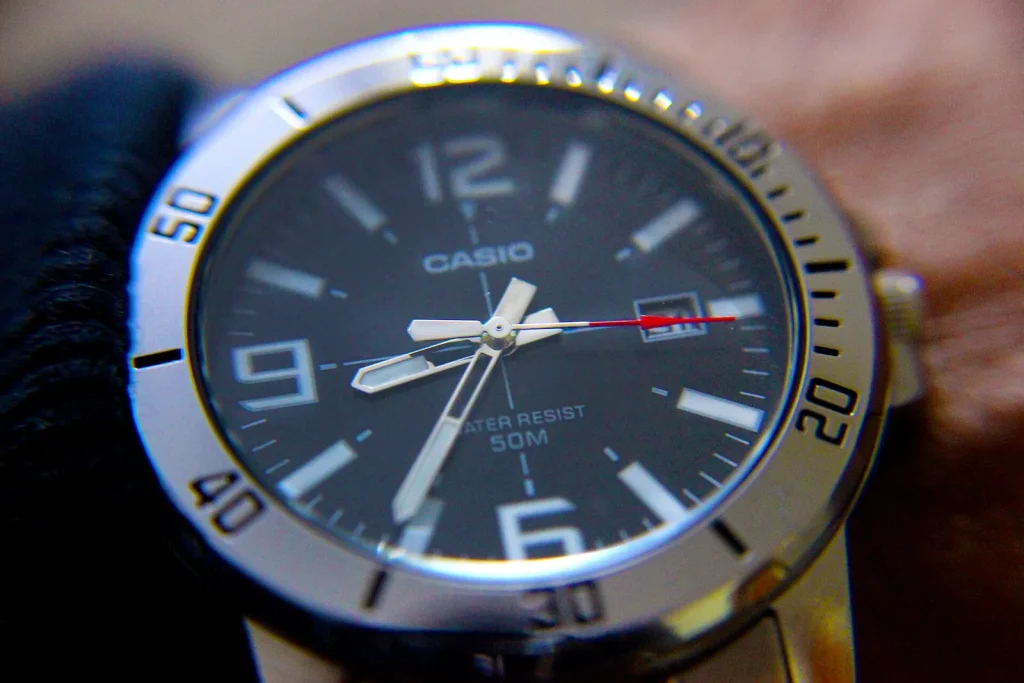
Photo: Casio Wrist Watch 01 by Suyash Dwivedi, CC BY-SA 4.0, via Wikimedia Commons