To host a trivia night, split guests into teams of three to six, prepare six to eight rounds of ten questions, and score with answer sheets handed in at the end of each round. Keep the pace brisk and the mood friendly. This guide covers the format, question writing, and scoring in detail.
Pick a format to host a trivia night
Decide how formal you want to be. A casual home quiz can be as simple as a list read aloud, while a larger event benefits from printed answer sheets and a scoreboard.
| Format | Best for | Notes |
|---|---|---|
| Team quiz | Most groups | Teams share one sheet and discuss answers |
| Individual quiz | Small groups | Each person competes alone |
| Buzzer style | Fast, high-energy parties | Needs a way to judge who was first |
| Picture or music round | Adding variety | Needs a screen or speaker |
Plan the structure
Six to eight rounds of about ten questions each gives roughly 90 minutes to two hours, including a break. Give every round a theme so players can look forward to their strengths, such as geography, food, science, sport, or general knowledge.
- Welcome and explain the rules.
- Run two or three rounds.
- Take a break with snacks and a quick scoreboard update.
- Run the remaining rounds.
- Hold a tiebreaker if needed, then announce winners.
Write good questions
Great questions are clear, have one correct answer, and can be verified. Always check facts in more than one reliable source, and note the answer on your sheet before the night.
- Mix easy, medium, and tricky questions in every round.
- Avoid questions with answers that change, such as record holders or current officeholders.
- Steer clear of divisive topics, so everyone feels comfortable.
- Include a few fun questions that people can guess at.
- Keep the wording short enough to read aloud once or twice.
Scoring that stays fair
One point per correct answer is usually enough. For a bonus round, offer double points on a theme round.
Have teams swap sheets for marking, or collect them and mark between rounds. Read out the correct answers after each round, and decide in advance how to handle partial answers and spelling. Keep a tiebreaker question ready, ideally a number such as “how many”, where the closest answer wins.
Be a good host
Speak clearly, give teams a moment to think, and repeat each question. Be generous with rulings, and have a policy for disputes, such as the host’s decision being final. Keep phones away to avoid searching for answers, or make it a stated rule.
Energy matters as much as accuracy. A little banter, a prize for the best team name, and a booby prize for last place keep everyone smiling. Use small prizes such as a trophy, chocolate, or bragging rights.
Make it your own
Themes spice up the evening. Try a film round inspired by our guide to how film genres evolved, or a lighter evening alongside board game night ideas. Quizzes also make a lively extra for a book club social, and for an end-of-night singalong, see our karaoke night tips.
Sample round ideas
Variety keeps teams engaged. Try mixing three or four of these into your evening.
- General knowledge: a broad warm-up that suits all ages.
- Picture round: teams identify landmarks, foods, or objects from printed photos.
- Music round: play short clips and ask for song titles.
- True or false: quick and good for lighter rounds.
- Connections: teams work out what a group of answers has in common.
Equipment checklist
Gather pens, answer sheets, a scoreboard or flip chart, a timer, and a clear printed copy of your questions and answers. Number the sheets and have spare paper ready. If you are using a screen for pictures or music, test it beforehand. Small, fun prizes and a name tag or table number for each team keep the evening organised without making it feel stiff.
Finally, think about accessibility and pace. Print answer sheets in a clear, readable size, and read each question at a steady speed so that no one feels left behind. If you notice a team struggling, a gentle hint or a bonus easy question can lift spirits. The best trivia nights are the ones where everyone, including the last-place team, leaves smiling and asking when the next one will be.
Key takeaways
- Use teams of three to six and six to eight themed rounds.
- Write clear, checkable questions with a mix of difficulty.
- Score simply, announce answers each round, and prepare a tiebreaker.
- Keep the tone friendly with small, fun prizes.
For more ideas, head to the entertainment archive.
Frequently asked questions
How many questions should a trivia night have?
Between 60 and 80 works for most evenings, spread across six to eight rounds.
How big should teams be?
Three to six players per team is ideal. Larger teams can let some members fade into the background.
How do I stop people cheating?
Ask teams to keep phones away, and tell them at the start. Friendly reminders usually do the job.
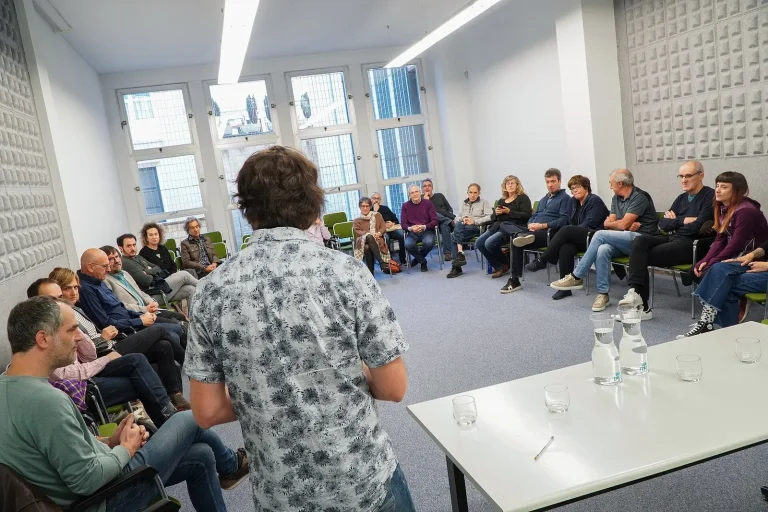
Photo: Pub Quiz Night by Hilary Murugu, CC BY-SA 4.0, via Wikimedia Commons