Pet grooming at home comes down to four basics: regular brushing, gentle nail trims, quick ear and teeth checks, and occasional baths when needed. Keep sessions short, reward your pet, and stop if either of you gets stressed.
Grooming is not only about looks. It keeps coats clean, spreads natural oils and lets you check for lumps, parasites, sore spots and anything unusual while you handle your pet.
Set the stage for pet grooming at home
Choose a quiet spot with good light and a non-slip surface, such as a towel or mat. Gather what you need first so you are not leaving your pet halfway through.
Start with short sessions of a few minutes and offer treats or praise. Puppies and kittens who are handled gently from the start usually accept grooming more easily, and the new puppy preparation guide includes handling tips for the first week.
Brushing by coat type
| Coat type | General approach |
|---|---|
| Short and smooth | Soft brush or grooming mitt, roughly weekly |
| Long or silky | Comb and brush often to prevent tangles |
| Thick double coat | Undercoat-style rake or comb, more often during heavy shedding |
| Curly or wool-like | Frequent brushing down to the skin to prevent mats |
Brush in the direction of hair growth, gently, and go slowly around the belly, armpits and behind the ears, where mats form. Never pull hard on a mat; if it is tight against the skin, ask a groomer or vet for help.
Nail trims without the drama
Overgrown nails can be uncomfortable and can affect how a pet walks. Use a trimmer made for pets and trim only the tip. In nails with a visible pink area, the quick is the blood-and-nerve section, so stay well clear of it. In dark nails, trim tiny slices at a time.
Do one paw or even a few nails per session if your pet is wriggly. If you are nervous, ask your vet or a groomer to show you once. Cats often tolerate a few claws at a time, especially after a meal.
Ears, eyes and teeth
Ears
Look inside for redness, bad odor, discharge or lots of head shaking. Wipe only the visible outer area with a soft cloth or a pet-appropriate cleaner. Do not push anything deep into the canal.
Eyes
Wipe away light crust at the corners with a damp, soft cloth. Cloudiness, squinting or heavy discharge needs a vet.
Teeth
Brush with pet toothpaste and a soft brush or finger brush, building up slowly. Human toothpaste is not suitable for pets.
Bathing basics
Many pets need baths only occasionally, and cats often manage on their own. Overbathing can dry the skin, so ask your vet how often is appropriate for your pet.
- Brush first to remove loose hair and tangles.
- Use lukewarm water and a shampoo made for the species.
- Avoid eyes, ears and nose, and rinse thoroughly.
- Towel dry, and use a low, cool setting on a dryer only if your pet tolerates it.
- Reward with a treat and a quiet rest.
Use grooming as a health check
As you brush, run your hands over the whole body. Note lumps, hot spots, fleas or flea dirt, scabs, weight changes or sensitive areas, and mention them to your vet. A regular routine also fits well with exercise and play, such as those in our dog exercise by size and age article. Cats can enjoy grooming as part of an enriched day, as covered in indoor cat enrichment ideas. You will find related guides in the Pets category.
Know when to ask for help
Home grooming has limits. Heavy matting, deep skin irritation, strong odor, open sores or an animal who panics or bites during handling are all good reasons to call a professional. Never force a frightened pet through a session. Taking a break and trying again later, or asking a groomer to demonstrate technique, is a sensible way to protect both your pet and yourself.
Key takeaways
- Keep sessions short, calm and rewarded
- Match brushing to your pet’s coat type
- Trim only nail tips and avoid the quick
- Use grooming time to check skin, ears, eyes and teeth
This article is general information, not veterinary advice; please consult your veterinarian or a professional groomer about your pet’s specific needs.
Frequently asked questions
How often should I brush my pet?
It depends on coat type. Short coats may need a weekly brush, while long or thick coats can benefit from brushing several times a week. Your vet or a groomer can advise.
Can I use human shampoo on my dog?
It is generally better to use a shampoo made for dogs, because skin differs from ours. Ask your vet if your pet has skin concerns.
What if I cut the quick?
It can bleed and hurt. Stay calm, comfort your pet and ask your vet what to keep on hand to stop bleeding. If it will not stop, call your vet.
When should I see a professional groomer?
Consider one for matted coats, difficult breeds, or pets who are anxious or hard to handle. A groomer can also show you techniques.
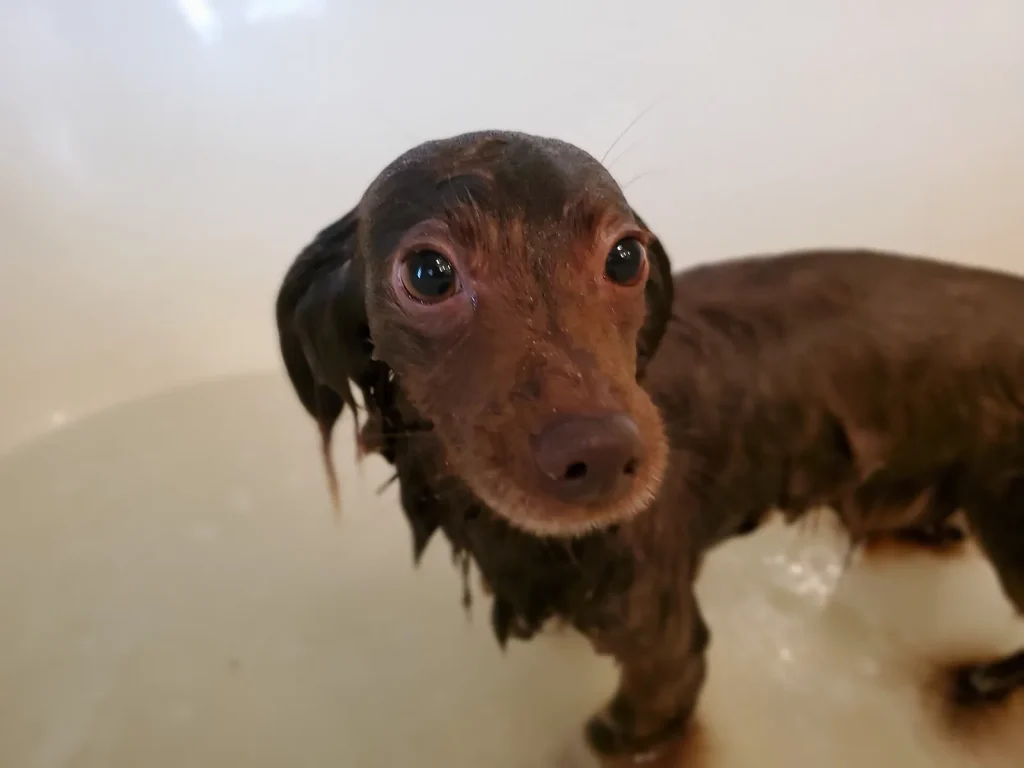
Photo: Cute bath dog by Kjeldgaardcameron, CC BY-SA 4.0, via Wikimedia Commons