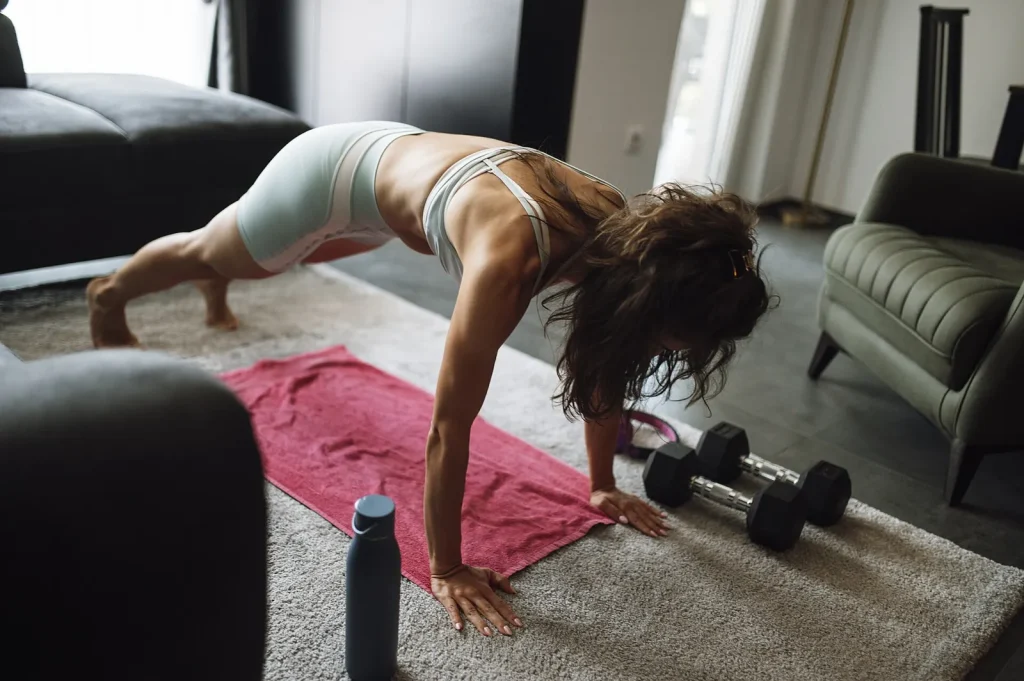
Home workout planning comes down to four decisions: your goal, how many days you can train, which basic movements to include and how you will progress. A plan of two to four short sessions a week, using bodyweight and a few simple items, is enough for most beginners.
Set a realistic goal first
Choose something specific, such as “do three twenty-minute sessions a week for six weeks” or “build enough strength to do ten push-ups”. Process goals about habits are easier to control than outcome goals about appearance. Write the goal down and put it where you will see it. Review it every few weeks and adjust if life gets busier, because a flexible plan survives longer than a perfect one.
If you have a health condition, are returning after an injury or have been inactive for a long time, speak to a qualified health professional before starting.
Cover the basic movement patterns
You do not need dozens of exercises. Most programmes rotate through a few patterns that work the whole body.
- Squat: bodyweight squats, sit-to-stands.
- Hinge: hip bridges, good mornings with no weight.
- Push: wall, incline or floor push-ups.
- Pull: backpack rows, towel rows or resistance-band rows.
- Core: planks, dead bugs, bird dogs.
- Cardio: brisk walking, stair climbing, marching on the spot.
Pick one or two exercises from each pattern, and replace them every few weeks to avoid boredom. A twenty-minute session might be three rounds of squats, incline push-ups, backpack rows and planks. Keep a short notebook of what you did and how it felt, since it shows progress faster than the mirror does.
Home workout planning for the week
A balanced layout alternates harder and easier days. Here is a sample you can adjust.
| Day | Focus | Time |
|---|---|---|
| Monday | Full-body strength | 25 minutes |
| Tuesday | Rest or easy walk | 20 minutes |
| Wednesday | Cardio intervals | 20 minutes |
| Thursday | Rest | – |
| Friday | Full-body strength | 25 minutes |
| Saturday | Active fun, such as a hike or a game | As desired |
| Sunday | Rest and stretching | 10 minutes |
Two sessions are better than none, and beginners should treat the table as a ceiling, not a minimum.
Structure each session
Warm up, work, cool down
Start with about five to ten minutes of easy movement. Our warm-up routine fits neatly here. Then do your main exercises, such as three rounds of eight to twelve repetitions per movement with a minute of rest between. Finish with a few minutes of walking and gentle stretching.
Use a simple effort scale
Aim for the point where the last two repetitions feel challenging but your form stays clean. If form breaks down, stop the set or choose an easier variation.
Progress without extra gear
Progression means gradually asking more of your body. You can do that by adding repetitions, slowing the lowering phase, shortening rests, trying a harder variation or adding a set. Change one thing at a time and give each adjustment a couple of weeks.
When bodyweight stops feeling challenging, inexpensive options such as resistance bands, a backpack with books or a pair of adjustable dumbbells can add resistance.
Set up your space and stay consistent
You need about two metres by one metre of clear floor, a mat if your surface is hard and supportive footwear if your joints prefer it. Keep your equipment visible. Schedule workouts at the same time as other commitments.
Runners can use these sessions as cross-training to build strength that supports your stride, and the beginner running plan fits well alongside two strength days. If you pound the pavement often, review the advice on how to choose running shoes to protect your feet. Skip a day if you feel unwell, and return gently when you are ready. Missing one session does not undo your progress.
This article is general fitness information, not medical advice. Consult a doctor or qualified exercise professional before starting a new programme, and stop immediately if you feel pain, dizziness or unusual shortness of breath.
Key takeaways
- Start with a clear, realistic goal and a weekly schedule.
- Cover squat, hinge, push, pull, core and cardio patterns.
- Use warm-ups, rest days and gradual progression.
- Consistency beats intensity.
For further training reads, see our sports category.
Frequently asked questions
How many days a week should I work out at home?
Two to four days suits most beginners, with rest or light activity on the other days. Choose a number you can keep up.
Do I need equipment for a home workout?
No. Bodyweight exercises can cover every major movement pattern, and you can add bands or dumbbells later.
How long should a home workout be?
Twenty to forty minutes, including warm-up, is enough for many people. Shorter sessions still count.
How do I know when to make exercises harder?
When you can finish all sets with good form and the last repetitions no longer feel challenging, try more repetitions or a harder variation.
Photo: Woman exercises indoors with dumbbells and a yoga mat in a well-lit living room by Shixart1985, CC BY 2.0, via Wikimedia Commons