To organize a casual local league, pick one sport, recruit enough players for four to six teams, book a regular venue, agree simple rules and publish a schedule everyone can see. Keep it friendly, keep it small at first, and let it grow once people are showing up.
Step 1: Decide what your casual local league is
Be clear about your purpose. Is it purely social, a mild competition or something in between? A casual local league works best when everyone shares expectations. Write one sentence describing it, such as “friendly five-a-side on Tuesday evenings, all abilities welcome.”
Choose a sport you can actually run. Soccer, basketball, softball, volleyball and ultimate frisbee all suit local groups. If your group is mixed in experience, our rules primer for soccer, basketball and baseball can help everyone start from the same page.
Step 2: Find players and form teams
Recruit through neighbourhood groups, workplaces, community boards and word of mouth. Aim for a few more players than you need, because not everyone can attend every week.
Balanced teams
A fair draft keeps matches interesting. Ask players to rate themselves loosely, then let captains pick in turn, or shuffle teams each season. Rotating teams also helps newcomers meet people.
Step 3: Secure a venue and time
Public parks, schools, church halls and community centres often have bookable space. Ask about permits, insurance requirements and opening hours. Pick one weekly slot rather than shifting around. Predictability is the secret to attendance. Have a wet-weather backup, such as an indoor hall or a rain date, so a forecast does not end your season. Arrive early to set up cones and goals, and agree who locks up at the end.
Step 4: Set simple rules
Use the standard rules of the sport, then modify only what you need. Smaller pitches, shorter halves and unlimited substitutions are common casual adjustments. Put the key points on one page.
- Match length and number of players per side.
- How substitutions work.
- What happens in a draw.
- Who referees, perhaps on a rota.
- Code of conduct covering respect, language and disputes.
Step 5: Build the schedule
A round robin, where each team plays every other team once, is the simplest format. The table shows how many rounds you need for different team counts.
| Teams | Total matches (single round robin) | Rounds needed |
|---|---|---|
| 4 | 6 | 3 |
| 5 | 10 | 5 |
| 6 | 15 | 5 |
| 8 | 28 | 7 |
For an odd number of teams, one team gets a bye each round. Finish with a short playoff or a social event if you want a sense of occasion.
Steps 6 to 8: safety, communication and staying power
Step 6: Handle safety and paperwork
Keep a basic first-aid kit, know where the nearest phone and emergency access are, and encourage everyone to warm up using a short warm-up routine. Ask players to confirm they are fit to take part, and consider a simple waiver if your venue requires one. Rules about liability and insurance differ by location, so check with the venue or your local authority.
If young players are involved, see our notes on youth sports etiquette and follow any local safeguarding requirements.
Step 7: Communicate and track results
A group chat or shared spreadsheet is enough. Post schedules, results and cancellations in one place. Send a reminder the day before each match and confirm weather plans early. Share the load: ask volunteers to handle equipment, refereeing and social media. Thank them publicly, because organizers who feel appreciated tend to stay.
Step 8: Keep it fun and sustainable
Review after each season. Ask what worked, what didn’t and whether to grow. Small touches such as a season-end barbecue or a silly trophy keep morale high. If fees are needed for venue hire or equipment, keep records open and charge only what you need.
This article is general information, not legal, financial or medical advice. Check local venue rules and consult a qualified professional about insurance, liability or health questions.
Key takeaways
- Start small with one sport, one venue and one weekly slot.
- Agree simple written rules and a code of conduct early.
- Use a round robin and clear communication.
- Review each season and adjust.
For more community sports ideas, browse our sports category.
Frequently asked questions
How many players do I need to start a local league?
Enough for at least four teams is a good target, which means roughly twenty to forty players depending on the sport. Smaller leagues can work with three teams.
Do I need insurance to run a casual league?
It depends on the venue and your location. Ask the venue or local authority what they require, and seek professional advice if you are unsure.
How do I keep a league from falling apart?
Keep a regular time, communicate clearly and share the work among volunteers. Fun matters more than competition.
What is the easiest schedule format?
A single round robin, where every team plays every other team once, is simple and fair for most casual groups.
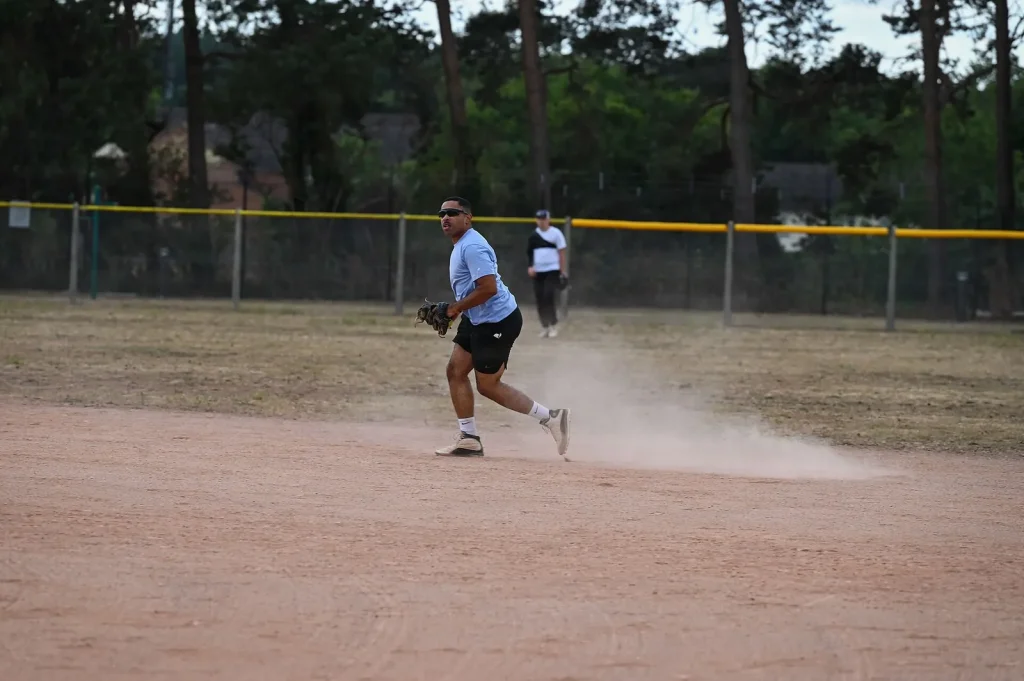
Photo: RAF Mildenhall and RAF Lakenheath Intramural Softball Game by U.S. Air Force photo by Airman 1st Class Tasi Calip, Public domain, via Wikimedia Commons