The US census works by counting every person living in the country once, every ten years, as required by the Constitution. The results decide how the 435 seats in the House of Representatives are divided among the states and guide how large amounts of public funding are distributed. This guide explains how the count is organized and why it matters.
Why the census exists
The Constitution requires a count of the population every ten years, and the first one took place in 1790. Its original purpose was political: to divide seats in the House fairly based on population. That process is called apportionment.
Over time, the census has grown to serve other purposes. Communities, businesses, and researchers all rely on its data.
Who runs it
The US Census Bureau, part of the Department of Commerce, carries out the count. It is staffed by career statisticians and temporary workers hired for the large field operations. The count takes place in years ending in zero.
How the census works: the count in five steps
The process involves several stages, and the Bureau builds it around one aim: counting each person once, in the right place.
- Building an address list. The Bureau maintains a list of residential addresses across the country and updates it before each census.
- Inviting responses. Households receive invitations to respond online, by phone, or by mail.
- Following up. Households that do not respond may be visited by census takers.
- Processing the data. The Bureau reviews the responses, removes duplicates, and fills gaps using established statistical methods.
- Reporting results. Population totals for apportionment are delivered to the president, and detailed data follows for states and communities.
Where people are counted
People are generally counted at their “usual residence”, meaning where they live and sleep most of the time. College students living away at school, for example, are counted at their campus residence, and people in group living facilities are counted there.
What the census asks
The questionnaire is short. It asks about the number of people in a household, their ages, sex, race, ethnicity, and relationship to one another, and whether the home is owned or rented. It does not ask for Social Security numbers or financial account details.
Who gets counted, and who is hard to count
Some groups are harder to reach than others. Young children, renters who move often, people in rural areas without reliable mail service, and people in crowded or temporary housing have all been undercounted in past censuses. The Bureau runs outreach campaigns and works with local organizations to improve response in these communities.
After each census, the Bureau also runs a follow-up study to estimate how accurate the count was. That evaluation shows where people were missed and where some were counted twice, and it informs planning for the next round.
Privacy and confidentiality
Federal law, in Title 13 of the US Code, protects the confidentiality of census responses. Individual answers cannot be shared with other government agencies or used against respondents, and the Bureau publishes only statistical summaries. Personal records are held back from public release for 72 years.
What the numbers are used for
| Use | How the data helps |
|---|---|
| Apportionment | Divides House seats among the states |
| Redistricting | Helps states draw district boundaries |
| Funding | Informs the distribution of federal and state program funds |
| Planning | Guides decisions on schools, roads, and services |
| Business and research | Shows who lives where and how communities change |
Business owners often turn to census data to understand local markets, which ties in with ideas in how to write a business plan.
Census versus surveys
The decennial census is a full count. Between censuses, the Bureau runs sample surveys, such as the American Community Survey, that gather more detailed information from a portion of households and produce estimates. A full count and a sample estimate answer different kinds of questions, so a careful reader notes which one a statistic comes from. That is the same kind of attention recommended in how to spot misinformation.
How the census connects to government
Because the count sets the number of House seats each state receives, it affects who represents you in Congress. To see how those representatives pass laws, read how a bill becomes law, and for how votes are totaled, see how elections are counted. Further explainers are available in the News category.
Key takeaways
- The US census counts everyone every ten years, in years ending in zero.
- It determines House seat apportionment among states.
- People are counted at their usual residence.
- Individual responses are protected by law.
- Surveys between censuses give estimates, not full counts.
Frequently asked questions
How often is the US census taken?
Every ten years, in years ending in zero, as the Constitution requires. The first took place in 1790.
Is my census response kept private?
Yes. Federal law protects the confidentiality of individual responses, and the Census Bureau publishes only statistical summaries.
Does the census count non-citizens?
The census aims to count everyone living in the United States, regardless of citizenship status.
What is the difference between the census and the American Community Survey?
The census is a full count every ten years. The American Community Survey is an ongoing sample survey that produces detailed estimates between censuses.
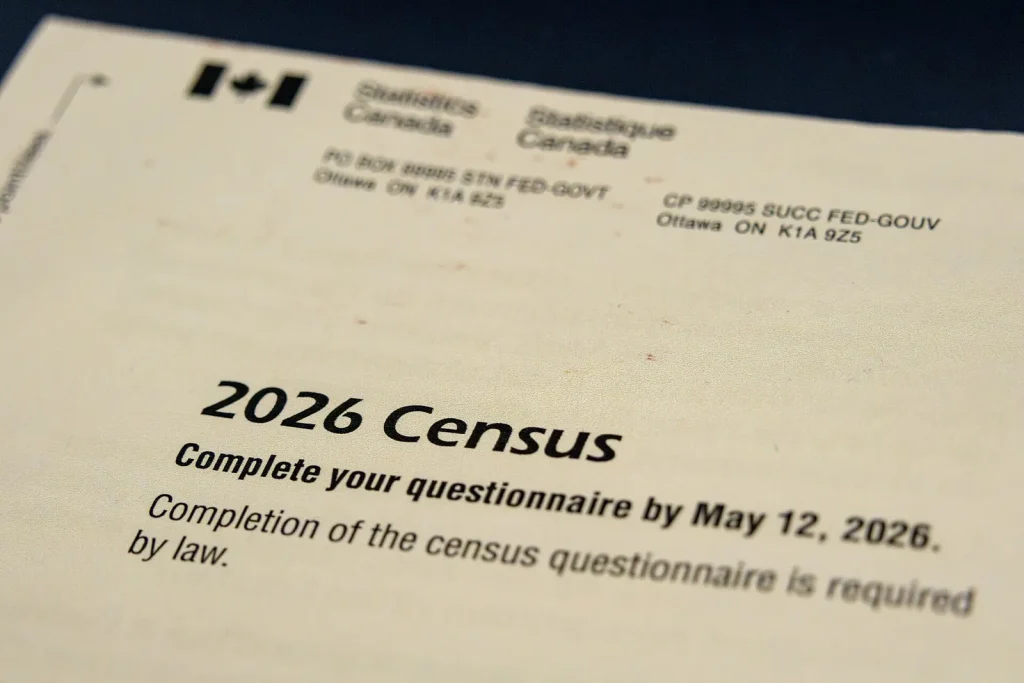
Photo: 2026 Canadian Census Envelope (Close-up) by Dillan Payne, CC BY-SA 4.0, via Wikimedia Commons