The easiest way to declutter your home is to work in small, defined areas, one drawer or shelf at a time, using simple rules for what stays. Short sessions beat a heroic weekend that leaves you exhausted. This plan breaks the job down so it feels manageable.
Why decluttering feels so hard
Clutter is rarely about laziness. Objects carry memories, possible future use and the guilt of money spent. Deciding on each one drains mental energy, which is why a big sort often ends with everything piled back in a box.
Knowing this helps. You are not failing; you are making hundreds of small decisions. The fix is to reduce the number of decisions per session and set rules in advance.
How to declutter your home: start small
Begin with a space where success is quick and emotions are low, such as a bathroom cabinet, a junk drawer or the bedside table. Set a timer for 15 or 20 minutes and stop when it rings.
Avoid beginning with photographs, gifts or sentimental items. Those are for later, when you have momentum and confidence in your decisions.
Use four piles to sort
Take everything out of the space so you can see it all. Then sort each item into one of four groups.
- Keep: used regularly or genuinely loved
- Relocate: belongs in another room
- Donate or sell: in good condition but no longer needed
- Recycle or discard: broken, expired or unusable
Before you start, have bags and boxes ready for each pile, and take donation bags out of the house as soon as they are full. Otherwise they simply move to the hallway and stay there.
Questions that make decisions easier
When you hesitate, ask a short question rather than debating. A few reliable ones follow.
- Have I used this in the last year?
- If I saw this in a shop today, would I buy it?
- Do I own more than one, and do I need them all?
- Does it belong in my life as it is now, not as it was or might be?
For items you cannot decide on, make a maybe box with a date on it. If you have not opened it within three months, you can usually let it go without looking inside.
Be kind to yourself when you find items that cost a lot of money. The money is already spent, and holding on to the object does not bring it back. Passing it to someone who will use it is often the better outcome, and it frees space you can enjoy now.
A room-by-room order that works
| Area | Good first target | Rough time |
|---|---|---|
| Kitchen | Expired food, duplicate utensils, mismatched containers | 30 minutes |
| Bedroom | Clothes that do not fit or are never worn | 45 minutes |
| Bathroom | Old toiletries and unused products | 15 minutes |
| Living room | Magazines, cables, loose papers | 20 minutes |
| Hallway | Coats, shoes and bags that are not in season | 20 minutes |
Wardrobes are often the biggest source of clutter, and a capsule wardrobe approach can make that sort far easier. Since you will likely donate or resell what you remove, it also leads naturally toward more sustainable choices.
Keep it from coming back
Decluttering is not a one-off event. The most effective habit is a one-in, one-out rule, so that anything new replaces something old. A basket by the door for outgoing items makes donating easy.
Give everything a home, and put it back as part of a daily reset. A ten-minute tidy in the evening fits easily into a morning routine or an evening wind-down, and it makes the next day calmer. If tidying keeps slipping, our time management basics can help you carve out the slot.
Finally, think before you buy. Pausing for a day before a non-essential purchase prevents many future clutter problems, and it is the cheapest organising tool there is.
If you share your home, agree on the rules before you begin. Sort your own belongings first and invite others to do theirs, rather than clearing their things without asking. Shared spaces are easier to tackle once everyone has seen the progress.
Key takeaways
- Work in short sessions in small areas to avoid burnout.
- Sort into keep, relocate, donate and discard.
- Use simple questions to decide, and keep a dated maybe box.
- Prevent clutter with a one-in, one-out rule.
- Find more ideas for calmer living in our lifestyle section.
Frequently asked questions
Where should I start decluttering?
Choose a small, low-emotion space such as a drawer or bathroom cabinet. A quick win builds momentum for harder areas.
How do I declutter sentimental items?
Leave them until last, keep the few that mean the most, and photograph the rest if that helps. You are keeping the memory, not every object.
What should I do with things I no longer need?
Donate usable items, sell valuable ones and recycle what you can. Check local guidelines for electronics and chemicals.
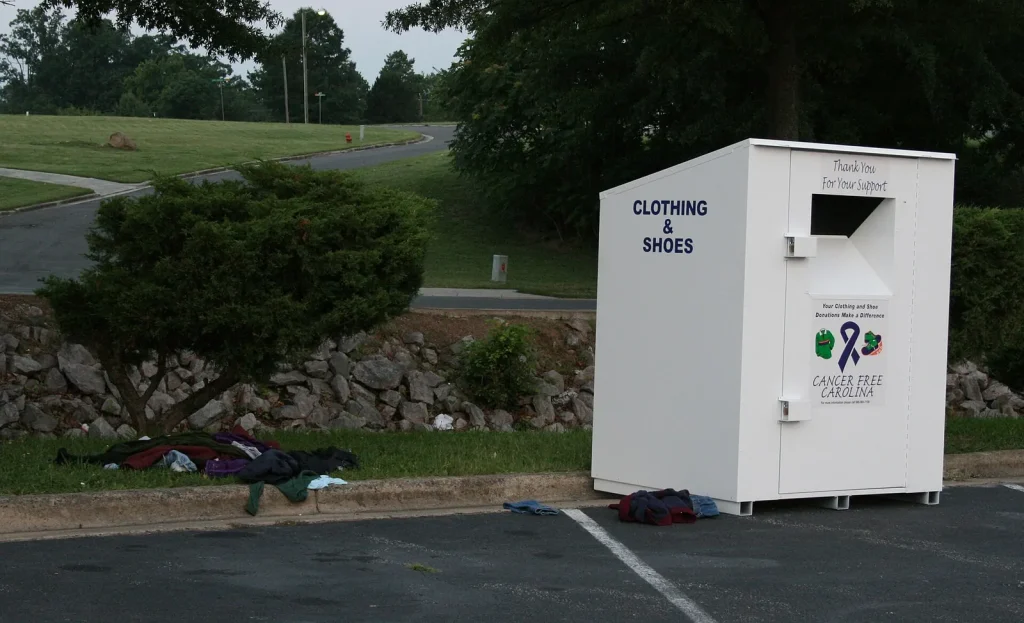
Photo: 2008-07-23 Clothing donation box in Durham by Ildar Sagdejev (Specious), CC BY-SA 4.0, via Wikimedia Commons