The best note-taking methods are the ones that match the material: Cornell for lectures you will revise from, outlines for structured topics, mind maps for linked ideas, and charts for comparisons. No single layout wins everywhere, so the smart move is to know all four and switch as needed.
Below is a plain-language tour of each, with a quick guide to choosing.
What good notes actually do
Notes have two jobs. During a lecture or a reading session they keep your attention active, and afterwards they give you something compact to revise from. A method that does the first job but fails the second, such as copying nearly everything down word for word, leaves you with a long document and little understanding.
Whichever method you pick, aim to write in your own words, leave white space, and mark anything you did not follow so you can fill the gap later.
The Cornell method
Developed by Walter Pauk at Cornell University, this method divides a page into three zones: a wide right-hand column for main notes, a narrow left-hand column for cues or questions, and a summary strip at the bottom.
You take notes in the main area during class. Afterwards you write questions in the cue column, then cover the main notes and test yourself. Finally you summarise the page in a sentence or two. It is excellent for revision because the self-test is built into the layout.
The outline method
Outlines use indentation to show hierarchy: main headings at the left, supporting points indented beneath them. They work best when the speaker or textbook is already well organised, such as a history lecture that moves through dates and causes in order.
The weakness is speed. If the lecturer jumps between topics, you may spend more effort deciding where a point belongs than listening to it.
Mapping and charting
Mind maps
A mind map places the central topic in the middle of the page and branches outward into related ideas. It suits subjects where connections matter, such as how the causes of a war interact. It is less comfortable for dense, sequential detail.
The charting method
Charting uses columns and rows, so it is ideal for comparisons: three economic systems side by side, or several chemical elements and their properties. If you notice a lecture is repeating the same categories of information, switch to a chart on the spot.
Side-by-side note-taking methods comparison
| Method | Best for | Watch out for |
|---|---|---|
| Cornell | Revision-heavy courses | Needs a follow-up session |
| Outline | Well-structured lectures | Hard when speakers jump around |
| Mind map | Linked ideas and brainstorming | Messy with lots of detail |
| Chart | Comparisons and categories | Only fits some content |
Paper or screen?
Handwriting is slower, which pushes you to summarise instead of transcribe, and some research suggests this can help understanding. Typing is faster, searchable and easy to reorganise. Either can work; the real risk on a laptop is distraction, so close other tabs while you write.
Adapting methods to different subjects
Science and maths lessons often reward charts and worked examples, because the content is built from formulas, steps and categories. Literature and history lean on outlines and maps, where themes and causes interconnect. Language classes suit a two-column vocabulary list with a space for example sentences.
If a lecturer provides slides in advance, print or open them and annotate rather than copying. That leaves your attention free for the explanations that are not on the slides, which is usually where the real learning happens.
Turning notes into learning
Notes only pay off when you go back to them. Within a day, skim and tidy them, then turn key points into questions. If you want to take that further, pair your notes with spaced repetition so the important items resurface just before you would forget them.
The same habit helps when you tackle long texts. Our tips on how to read faster with comprehension include how to take lean notes from a chapter, and a good set of notes is the raw material for an essay, as covered in how to write a good essay. More study guides live in the education category.
Key takeaways
- Pick the layout to suit the material rather than sticking to one habit.
- Cornell is best for revision, outlines for structure, maps for links, charts for comparisons.
- Use your own words and review within a day.
- Experiment for a week with each method before deciding.
Frequently asked questions
Which note-taking method is best for beginners?
The outline method is the easiest to start with because it mirrors how most lectures are organised. Cornell is a good next step once you want better revision.
Should I write down everything the teacher says?
No. Capture main ideas, examples and anything flagged as important. Word-for-word transcription keeps your hands busy but your mind passive.
Can I combine methods in one notebook?
Yes. Many students use outlines for most lessons and switch to a chart or map when the content calls for it.
How soon should I review my notes?
Ideally within 24 hours, when the lesson is still fresh. A quick tidy-up and a few self-test questions are enough.
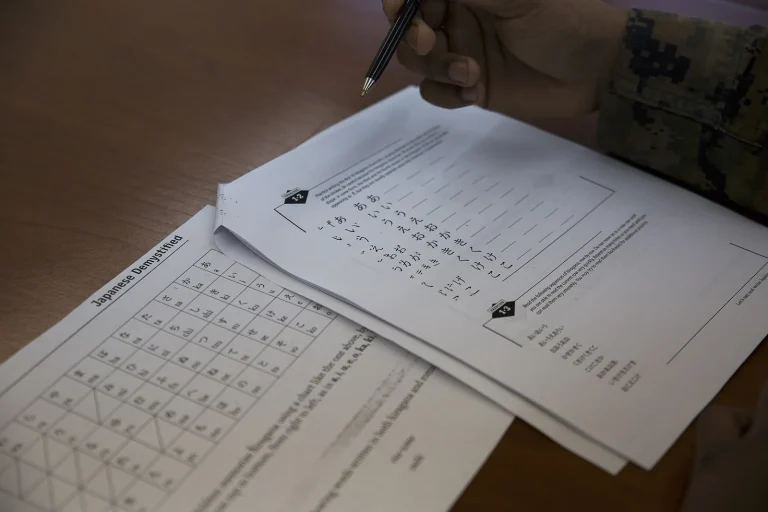
Photo: Montaigne Scholarship student taking notes Shimer College 2011 by Shimer College, CC BY 2.0, via Wikimedia Commons