The best family traditions ideas are small, repeatable and easy to keep: a weekly pizza night, a birthday breakfast, a walk after dinner or a yearly photo. A tradition does not need to be elaborate. It just needs to happen regularly and mean something to your family.
What makes a tradition stick
Traditions give children a sense of belonging and something to anticipate. They also create shared memories, which often matter more than the activity itself.
Three qualities help a tradition last. It should be simple enough to do even in a busy week, flexible enough to adapt as children grow, and enjoyable for the whole family. If it feels like a chore, change it.
Everyday and weekly rituals
Small habits repeated often create the strongest sense of rhythm.
- Themed dinners: pasta Monday, breakfast-for-dinner Friday.
- Highs and lows: each person shares the best and hardest part of the day.
- Weekend walks or bike rides: same route or somewhere new each time.
- Game night: a board game or cards, with snacks.
- Bedtime story or song: a gentle end to the day, as covered in our bedtime routine for kids guide.
A weekly game night is also a good alternative to devices, a theme explored in screen time boundaries.
Birthdays and milestones
Personal touches matter more than a large budget. Consider a birthday breakfast in bed, a special plate or a yearly height mark on a door frame. Some families write a short letter to each child every year to read later, or let the birthday child choose the dinner menu.
For bigger celebrations, our birthday party planning guide covers the logistics. Milestones like a first day of school or a new baby can have their own rituals too, such as the ideas in preparing kids for a new sibling.
Family traditions ideas for holidays and seasons
Families celebrate in many ways, and whichever occasions you observe, the pattern is the same: repeat what feels meaningful. Some ideas work across cultures and calendars.
| Time of year | Idea |
|---|---|
| Spring | Plant something together, or do a family clear-out and donate |
| Summer | Picnic by the water, backyard camping, a yearly day trip |
| Autumn | Apple picking, leaf collecting, a harvest meal |
| Winter | Hot chocolate and a film night, a gratitude jar, cooking a treasured recipe |
Respect your own cultural and religious heritage, and ask older relatives about traditions you may want to pass on. Recipes, songs and stories are lovely ones to preserve.
Start new traditions without pressure
- Pick one idea that excites you, not ten.
- Ask your children what they would enjoy.
- Try it a few times, then see whether it feels right.
- Keep it low-cost and low-prep.
- Be ready to let it evolve or retire.
Blended families, shared custody and busy schedules can make traditions harder, but they can also be a good opportunity to build new ones together. Nothing says every tradition must happen on a specific date; the first Saturday of the month works just as well. Practical ones count too, such as a seasonal outdoor project from our Parenting archive or a shared family chore morning with music and pancakes afterwards.
This is general information, and every family and child differs. It is not a substitute for professional advice. If you need support with family circumstances or children’s wellbeing, speak with a qualified professional.
Keep a record of your traditions
Memories fade, so capture them. A shared photo album, a notebook of recipes or a jar of written memories can turn small rituals into a family archive. Ask each person to add a line after the event, such as what they liked best. When children are older, these records become treasured keepsakes. They also help new traditions grow, since you can see which ones the family returns to again and again. If something stops working, let it go without guilt and replace it with something fresh. Traditions are there to bring people closer, and the best ones change gently as the family does.
Key takeaways
- Small, regular rituals matter more than grand occasions.
- Involve your children in choosing and shaping traditions.
- Keep them flexible, low-cost and enjoyable.
- Honour your family’s heritage while making room for new habits.
Frequently asked questions
How do I start a family tradition?
Choose a simple activity, set a regular time and try it a few times. If everyone enjoys it, it becomes a tradition naturally.
What if we have no traditions from our own childhood?
That is common. You can create entirely new ones, or borrow ideas from friends and other cultures that appeal to you.
How can traditions work with teenagers?
Give them a say and keep the commitment light. Teens often value traditions that respect their independence, such as a shared meal out.
Do traditions have to cost money?
No. Walks, stories, cooking and game nights cost very little and are often the favourites.
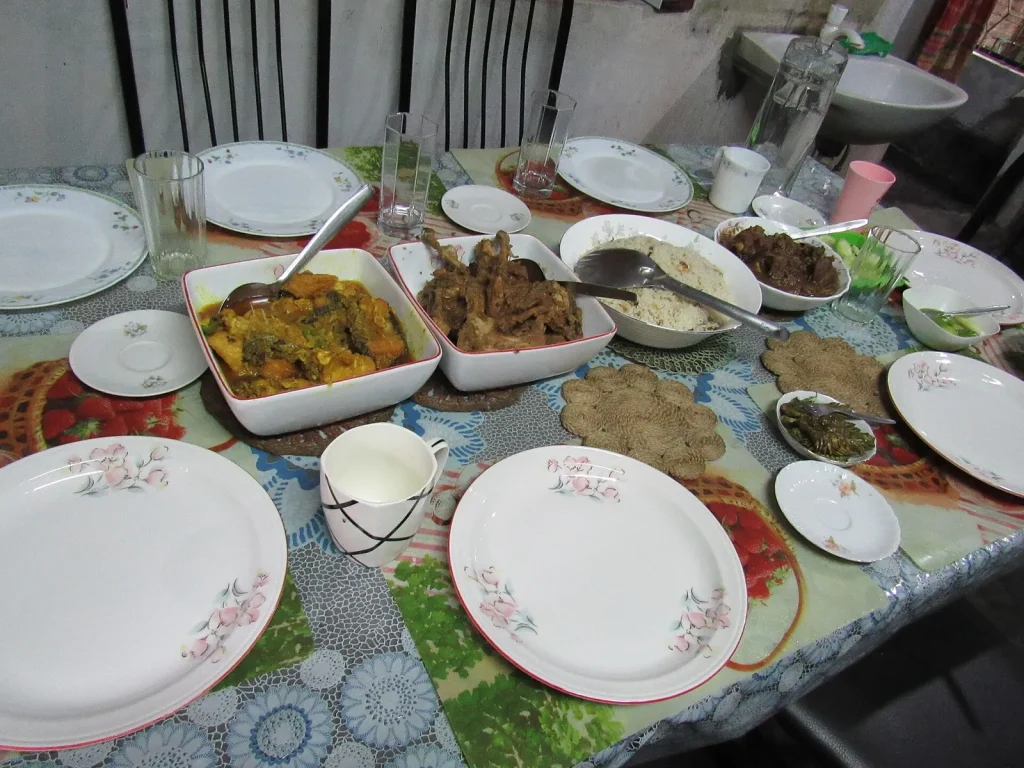
Photo: Dinner table arrangement with food of a middle class Bangladeshi family 01 by Afifa Afrin, CC BY-SA 4.0, via Wikimedia Commons