Jet lag happens when your internal body clock is out of step with the local time after you cross time zones. The jet lag basics are simple: light, sleep timing and a little preparation help your body adjust, though full recovery takes time.
Symptoms often include tiredness, poor sleep, trouble concentrating and a disrupted appetite. It is not a sign that something is wrong with you, only that your rhythm has not caught up with a new place.
Why jet lag happens
Your body runs on a roughly 24-hour internal clock, known as the circadian rhythm. It responds to cues such as daylight, meals and activity, and it adjusts slowly.
When a flight takes you across several time zones in hours, the clock lags behind. You feel sleepy at midday, wide awake at night, and hungry at odd times until your rhythm resets.
Jet lag basics: what makes it worse or better
| Factor | Effect |
|---|---|
| Number of time zones crossed | More zones generally means more adjustment |
| Direction of travel | Many people find eastward trips harder |
| Sleep before the trip | A rested start usually helps |
| Light exposure on arrival | Daylight is a strong cue for the body clock |
| Age and individual differences | Responses vary from person to person |
Traveling north or south within the same time zone rarely causes jet lag, although long flights can still be tiring.
Before you fly
Start with rest. Arriving already sleep-deprived makes everything harder, so avoid staying up late packing. Our guide on how to pack light can shorten that last-minute scramble.
Some travelers shift their sleep and meal times by an hour or so toward the destination in the days before departure. It is optional, but it can soften the change if your schedule allows it.
During the flight
The cabin is not a perfect place to rest, but you can make it better. Choose a seat that suits your sleep style, such as a window seat to lean against, and dress in layers because cabin temperatures shift.
Set your watch to the destination time when you board, and try to follow it. Sleep when it is night there, and stay awake when it is day, as far as is comfortable.
- Drink water regularly and limit alcohol, which can disturb sleep.
- Be mindful of caffeine timing.
- Stand, stretch and walk the aisle when it is safe to do so.
- Bring an eye mask, earplugs and a neck pillow if they help you rest.
More ideas for the journey itself appear in our airport tips guide.
After you arrive
Daylight is your strongest tool. Spend time outdoors in the morning or afternoon, depending on the direction you traveled, and keep the evening light low as bedtime nears.
Eat meals at local times, even if your appetite is off. Keep naps short, ideally under about 30 minutes and early in the day, so you do not delay your main sleep.
Plan the first days gently
Avoid scheduling important meetings or demanding activities in the first day or two if you can. A gentle walk, a simple meal and an early local bedtime go further than a packed schedule. If you are driving after landing, take extra care, as explained in our road trip planning guide.
When to ask a professional
It helps to remember that even frequent flyers feel jet lag. Experience tends to teach you your own pattern, such as how many days you need and which habits help most, and that knowledge is worth more than any one-size-fits-all rule.
Ordinary jet lag fades on its own. If you have a medical condition, take regular medication across time zones, or have persistent sleep problems, a doctor or pharmacist can offer advice that fits you.
This article gives general information, not medical advice. For questions about sleep, medication or health conditions, consult a qualified healthcare professional.
Planning where and when to go can also reduce the problem, and our guide to how to choose a destination by season is a good starting point. Find more in the travel category.
Key takeaways
- Jet lag is a mismatch between your body clock and local time.
- Rest before the trip and switch to destination time on boarding.
- Morning or afternoon daylight, matched to your direction, is the best reset signal.
- Keep meals on local time and naps short.
- Ask a healthcare professional about medical questions.
Frequently asked questions
How long does jet lag last?
It varies by person and by how many time zones you cross. A common rule of thumb is about a day of adjustment per time zone, but experiences differ widely.
Is flying east or west worse?
Many people find eastward travel harder, since it means falling asleep earlier than the body wants. Individual experience varies.
Do short trips need adjustment?
On a very short trip, some travelers keep their home schedule where practical. Others adapt to local time. Choose whichever fits the plans you have.
Should I use sleep aids?
That is a personal health decision. Speak with a doctor or pharmacist about what is suitable for you, rather than relying on general advice.
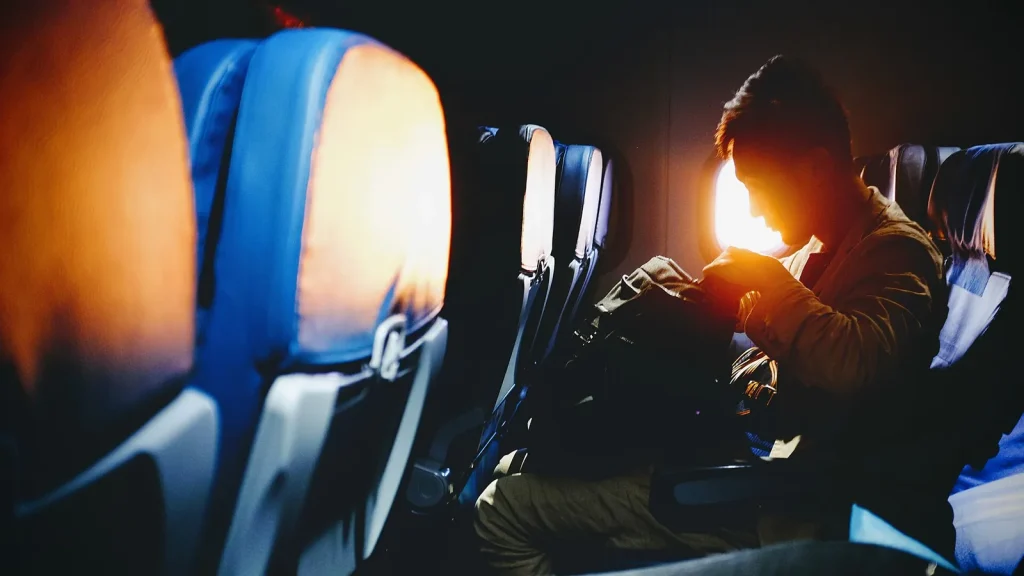
Photo: Airplane Window by Bambi Corro bambicorro, CC0, via Wikimedia Commons