To choose a destination by season, start with the kind of weather and atmosphere you want, then look for places where those conditions are typical during your travel dates. Matching the place to the time of year often matters more than the place itself.
A beach town in its rainy season and the same town in its dry season are almost two different trips. Thinking about timing first narrows a huge world to a short, useful list.
Start with what you want from the trip
Write down the experience, not the location. Do you want warm water, hiking weather, festivals, wildlife, snow, or a quiet city break with comfortable temperatures?
Once you know that, the calendar does much of the sorting. Hiking is often best in mild spring or fall conditions, skiing needs reliable snow, and a city sightseeing trip can be miserable in extreme heat.
How to choose a destination: the four things to weigh
Seasons affect more than temperature. When you choose a destination, compare it on four fronts.
- Weather: typical temperatures, rainy or monsoon periods, and risks like storms or extreme heat.
- Crowds: school holidays and public holidays often mean busy attractions and full lodging.
- Daylight: short winter days limit sightseeing, while long summer days stretch it.
- Events and closures: festivals can enhance a visit, but some places close attractions or services off-season.
A seasonal overview
Before the table, one reminder: every region has its own rhythm. A desert city may be pleasant in winter and punishing in July, while a mountain village might be at its best in summer and nearly closed in the shoulder months.
| Season | Often good for | Watch out for |
|---|---|---|
| Spring | Gardens, city walks, mild hiking | Changeable weather and showers |
| Summer | Beaches, long days, mountain trails | Heat, crowds, busy booking periods |
| Autumn | Foliage, harvest food, fewer crowds | Shorter days and early closures |
| Winter | Snow sports, festive markets, tropical escapes | Cold, limited daylight, storms |
This is a broad pattern, not a rule. Climate varies greatly with altitude, latitude and local geography, so look up your specific place.
Do not forget the other hemisphere
The southern and northern hemispheres have opposite seasons, and many tropical regions have wet and dry seasons instead of four. A winter holiday in the sun is possible if you choose a place where it is the warm part of the year.
Look at monthly climate charts, which show typical temperature and rainfall. Those charts tell you much more than a single average does.
Consider the shoulder seasons
Picture a coastal town in late spring or early autumn. The sea may be a little cooler and a few cafés may still be setting up or winding down, but you can often walk straight into a restaurant and find space on the promenade.
The weeks between peak and low season are often the sweet spot. Weather is generally pleasant, crowds are lighter and lodging and transport can be easier to find.
That timing also supports your spending goals, as covered in our budget travel habits guide. The trade-off is less certainty, so build in a rainy-day plan.
Match the season to your travel style
If you are driving, seasonal road closures and weather are serious planning points, and our road trip planning guide shows how to handle them. If you are flying a long distance, crossing time zones can affect the first days, and jet lag basics may be worth reading too.
Your packing list should follow the season as well. A few versatile layers, as described in how to pack light, handle shifting conditions better than a bag full of single-purpose items.
A simple decision process
If you are stuck between two options, imagine a typical day in each place during your chosen month. The one where the day sounds more appealing is usually the better fit.
- Choose your travel dates or month.
- List the experiences you want.
- Shortlist places where those experiences are typical in that month.
- Check crowds, holidays and closures.
- Compare the remaining options on cost, distance and effort.
Browse more ideas in the travel category.
Key takeaways
- Pick the experience first, then find places where the season supports it.
- Weigh weather, crowds, daylight and local events together.
- Remember the hemispheres are reversed and the tropics have wet and dry seasons.
- Shoulder seasons often balance comfort, crowds and cost.
- Check climate data when choosing and forecasts before packing.
Frequently asked questions
What is the shoulder season?
It is the period between the high and low seasons, when weather is often still pleasant but crowds thin out. The exact dates differ from place to place.
Are hemispheres reversed?
Yes. When it is summer in the northern hemisphere, it is winter in the southern one. Check the local season, not your own.
Is the low season a bad time to visit?
Not always. It can mean quieter streets and easier bookings, but some attractions or services may be limited, so confirm what is open.
How far ahead should I research the weather?
Look at long-term climate patterns when choosing, then check forecasts closer to departure. Climate tells you what is typical, while forecasts help you pack.
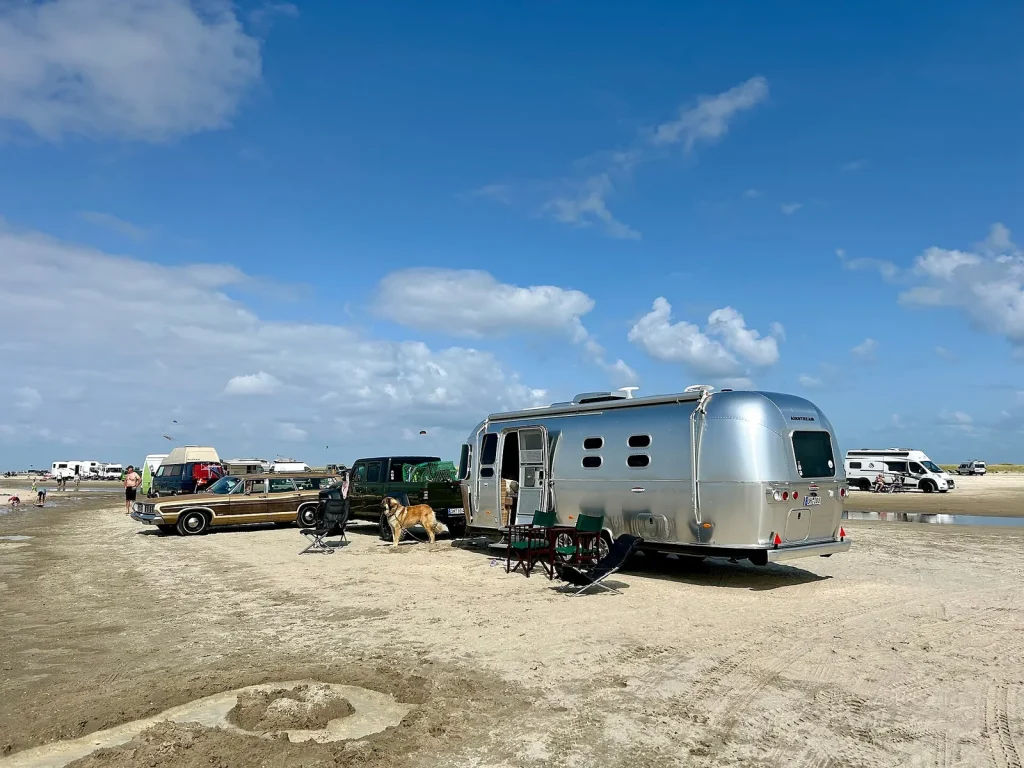
Photo: Airstream travel trailer, Lakolk beach, Rømø island, Denmark (2024-08-19) by Olgierd Rudak, CC BY-SA 4.0, via Wikimedia Commons